
Where Rescue Meets Rhythm: CPR-Compatible Songs
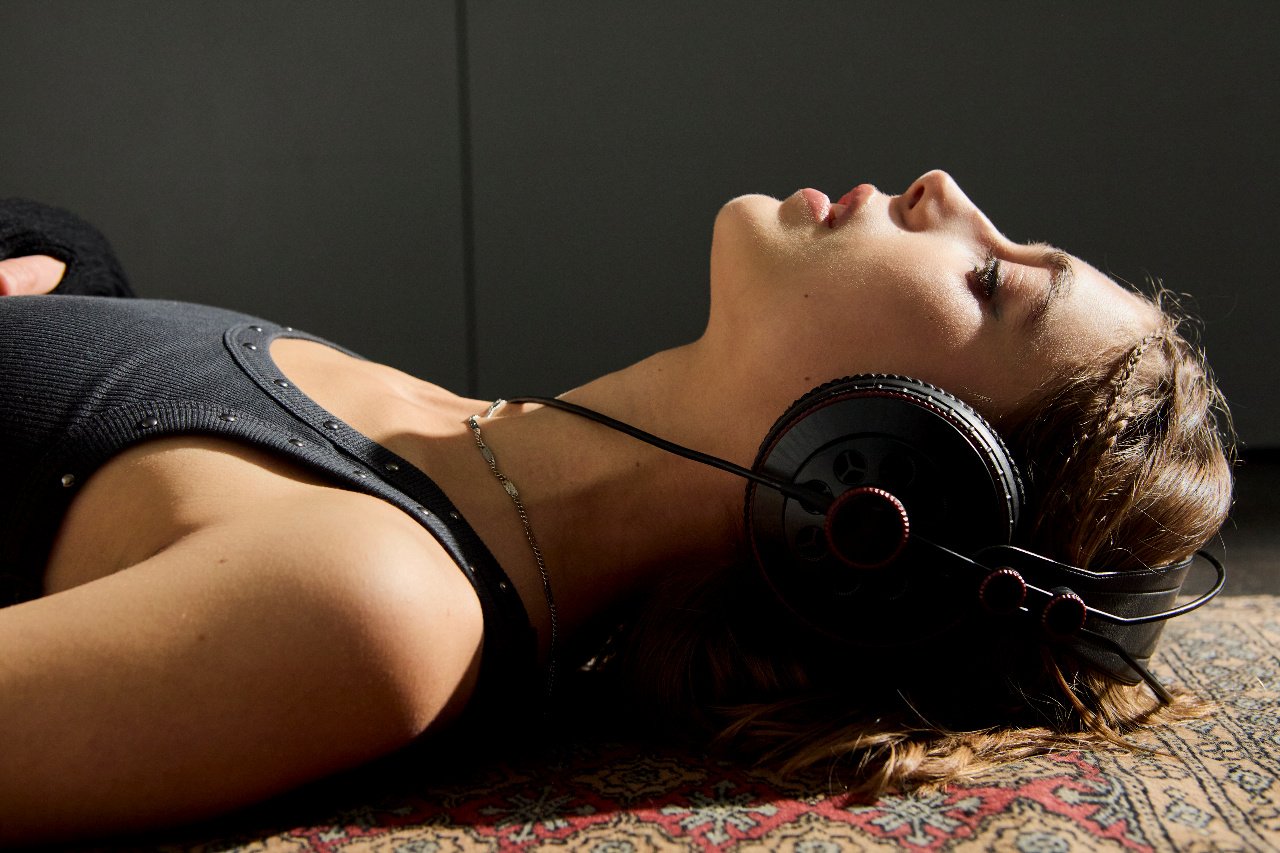
Take heed, Devil. Salvation is in the details too.
When it comes to saving lives, hands-only CPR is a numbers game-100-120 beats per minute to be exact. American Heart Association has people covered when it comes to keeping track of the beat. Their American Heart Association’s Spotify playlist spans five decades’ worth of songs falling within the same 100-120 compressions per minute protocol for performing hands-only CPR.
Last Night The Bee Gees Saved My Life (Nod to Indeep)
Whether or not you think disco serves the world of music well, there’s no denying it saves.“Staying Alive,” released in 1977, remains a gold (technically platinum) standard for CPR hands-only chest compressions nearly half a century later. At 103 beats per minute, its tempo mirrors a natural resting heartbeat and serves as a grounding template. TAs referenced above, the 1982 dance hit “Last Night a DJ Saved My Life” by Indeep is another top-tier choice at 109 beats per minute. Both are bass forward, prominently featuring percussion as heartbeat synergy/parallel.
Songs with a steady, driving beat and metronomic percussion rhythm provide an ideal aural backdrop to perform continuous chest compressions effectively.
Rescue Compositions
CPR-compatible songs cross genre lines, as vigorously as CPR chest compressions need to be performed, from hard rock to classical to pop to funk and R&B to country to heavy metal. The tracks range from Bon Jovi “Livin on a Prayer”/”You Give Love a Bad Name”/”It’s My Life” to Bon Scott (original vocalist for AC/DC), “Highway to Hell” (115 bpm) and “You Shook Me All Night Long” (127 bpm) ( to Blondie “Heart of Glass” (120 bpm) to Stevie Wonder’s “Superstition” (100 bpm)and t0 Beethoven, Symphony No. 5 , First Movement, to Bad Bunny. Add to that “Eye of the Tiger” by Survivor (108 bpm), to “Respect” by Aretha Franklin(115 bpm) to “Sweet Home Alabama” by Lynyrd Skynyrd to “Paranoid” by Black Sabbath.
A few of the more darkly titled and darkly amusing alternatives: “Another One Bites The Dust” by Queen (app. 110 beats per minute), the aforementioned “Highway to Hell” by AC/DC (app. 115 beats per minute), “Numb”by Linkin Park (app. 110 bpm),
“Murder on the Dance Floor,” Sophie Ellis-Baxtor (app. 116 bpm)
“Dead!” by My Chemical Romance (100 bpm).
Choosing a song that’s easy to remember in an emergency and under pressure is key. Cardiologist (and cardiac arrest survivor) Dr. Anezi Uzendu says: “In medical emergencies like cardiac arrests, when every second matters, the song is only as useful as it is familiar, so choose an earworm that’s hard to shake.”
In case you’re anxiously wondering if any songs from the Star Wars franchise are on the list, breathe. Just breathe. The Imperial March (Darth Vader's Theme) from the Star Wars Franchise commands a spot at app. 103 beats per minute. 2025’s “Golden” (120-123 beats per minute)
Some more current songs more likely to impart the familiarity edge to younger CPR administrators:
2025: “Golden” (120-123 beats per minute) Huntr/x, K-Pop Demon Hunters Movie.
2024: “Disease” Lady Gaga (101 beats per minute).
2023: “Dance the Night Away” Dua Lipa (app. 110 beats per minute).
2020: “Pink Pony” Chappell Roan (107 bpm).
2019: “The Man” Taylor Swift (110 bpm).
2016: “Can’t Stop The Feeling” Justin Timberlake (113 beats per minute).
2015: “Uptown Funk” Bruno Mars released in 2015 (115 beats per minute).
2013: “Lucky” Daft Punk (116 beats per minute)
Note: “Golden” is popular with nurses on Tiktok and Instagram for CPR training videos.
Kyle Hastings, a firefighter and paramedic and founder of SameDayCPR, an American Heart Association Training center, writes: “Using music while practicing CPR helps your brain remember the right rhythm and speed. Songs act as a mental cue, making it easier to recall the proper place under pressure. Over time, practicing with beats strengthens both your memory and muscle control so the correct rhythm becomes almost automatic.”
One study reported musicians performed chest compressions more effectively than non-musicians due to enhanced rhythm perception.
When someone’s heart stops beating (cardiac arrest), vital organ damage and death begin occurring within four minutes. That short window makes bystander CPR, even if imperfectly performed, critical to boosting survival rates (currently around 10% for out-of-hospital CPR) in the time it takes for professional medical aid to arrive. Vigorous CPR chest compressions act as a manual pump to circulate oxygenated blood throughout the body.
Denmark has the highest out-of-hospital cardiac arrest survival rate in the world at over 77%. In 2018, Save A Life For Scotland, the Scottish government’s digital CPR campaign to promote bystander CPR, featured “I’m Gonna Be” by The Proclaimers (app. 100 beats per minute). Survival rates rose as a result from 8.3 t0 10 percent, as did bystander CPR. In the US, less than ten percent of people suffering out-of-hospital cardiac arrest survive, the other 90 percent resulting in 350,000 deaths a year.
Music’s medicinal applications seem near endless: Helping t0 It helps restore speech to stroke and traumatic brain injury survivors, facilitating neuroplasticity, Music. It also boosts cognitive function, improving recall and attention span, easing chronic pain. Musicians undergoing brain tumor surgery play guitar during awake craniotomies to protect the parts of the brain that control their ability to play music.
Most of us know what it’s like to deeply love a song. When enough of us collectively resonate with the same one, it often ascends to anthem status. Understanding the creative arrangements that so enhance our lives also contain the compositional structure to save them is viscerally both stunning and comforting.