Similar Kind Discusses "the curtain" and Creative Evolution
Q: You've been making music together for years now. When you look back at your earliest releases, what do you think has evolved most not just musically, but in the way you approach being a band?
A: Pretty much everything has changed, we work on practically everything now as one unit and collaborate as a group. We all know our roles, strengths, weaknesses, and use this to fill in the gaps for each other to make the band the best version it can be. Whether it’s the song writing, social media, live sets, whatever, each member of the band has a designated unique aspect we each contribute to.
Q: Is there something about Similar Kind today that your younger selves would be surprised by?
A: We’re still at it. We still get to create and play our music. We began with zero expectations years ago, and now it's morphed into a real and lasting band.
Q: What's one creative risk you've taken recently that you don't think you would have attempted five years ago?
A: Sonically, “the curtain” is unlike anything we’ve put out before. We’ve been making an effort to explore a variety of sounds in production, so it’s been really fun to basically experiment with and incorporate things like wide guitar sounds and vocal distortion. Not to get too into the weeds, but for example, we used a Linn Drum Machine for the first time, it’s from the 1980’s, to layer and beef up the drum’s body. Paired with the Juno low-end keyboard, that’s really how we got it to sound so big and emphatic.
Q: Has your definition of success changed since you first started making music together?
A: When we started making music, the coolest aspect of it all was to just play live. Even being on a tour or having songs on Spotify, that was all new at one point. But we try not to focus too much on stereotypical success metrics like streams and followers (you can get caught up in that). Now, we really try focusing our success on how it genuinely affects our listeners, whether they relate to our lyrics or feel seen from our songs. I think another piece of success is just having new collective experiences together. When we play at places we’ve never been to, or gone to a new studio for the first time, that’s so meaningful and really represents growth to us.
Q: On that topic your new single the curtain digs into the idea of authenticity and performing. What called you to this theme specifically and especially using the comparison of a circus?
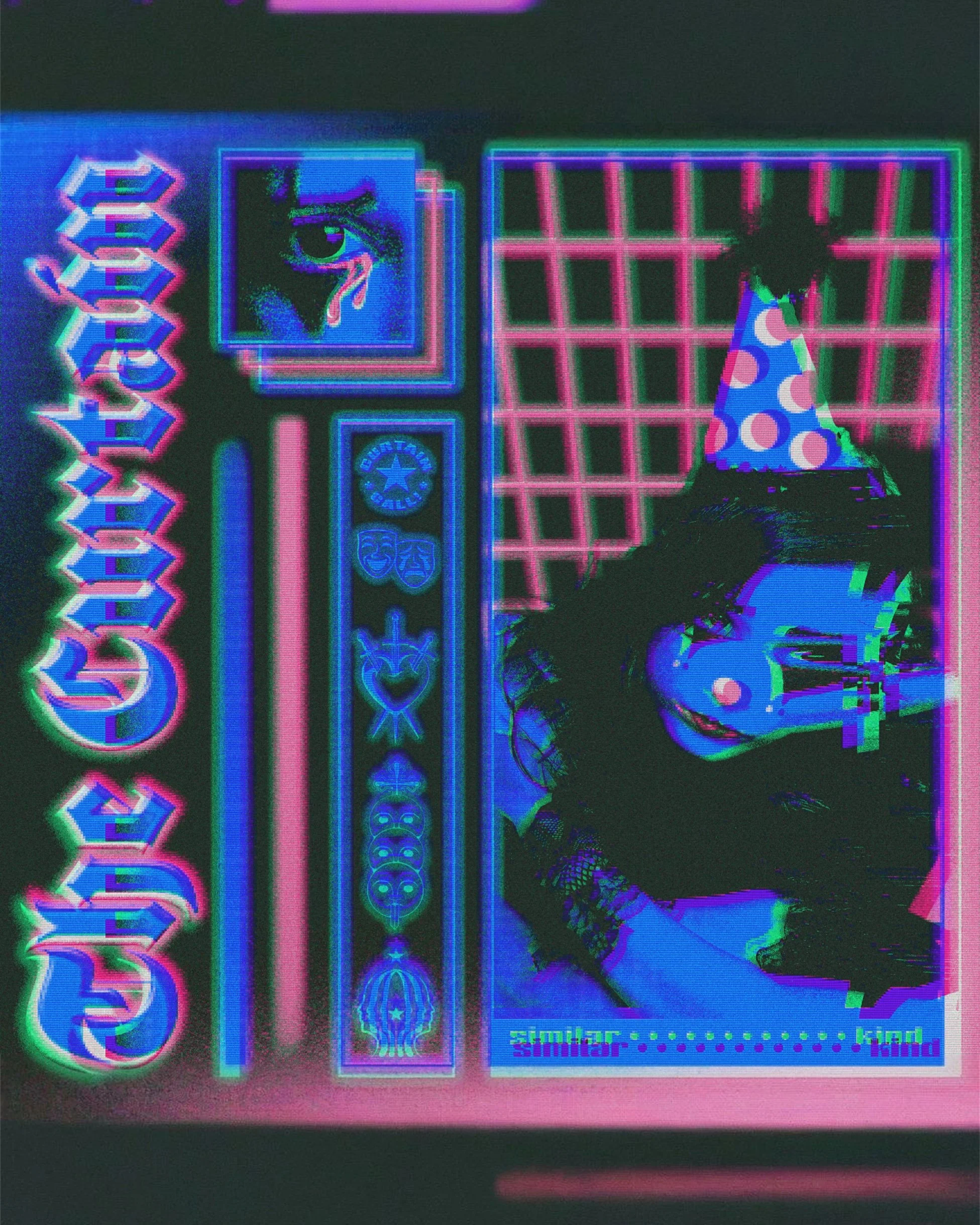
A: I (Julia) was called to the lyrical content of “the curtain” because of the current age we are in with new AI technology. I wrote the song through the point of view of an AI chatbot in order to examine humans and their new and unknown relationship with such an all encompassing tool. I specifically used the comparison of a circus because I likened AI to a jester of sorts due to the fact that its job is to entertain or provide whatever service its user pleases. The line “feed them bread and show them circuses” is a political metaphor that describes providing the masses with superficial appeasement in order to keep the masses content in a time of unrest. “The man behind the curtain” is the government/overarching force providing this entertainment in order to pacify its people into submission, the AI being the entertainment in the context of “the curtain.”
Q: About the new single, what conversations led to this song becoming the one you wanted to introduce this era with?
A: “the curtain” sonically was the most different from any of our past or future releases. We hadn’t put out music in a year, so we wanted to start out with something unique and exciting.
Q: The clown imagery feels playful on the surface but also a little unsettling. Why did that become the right visual language for this song?
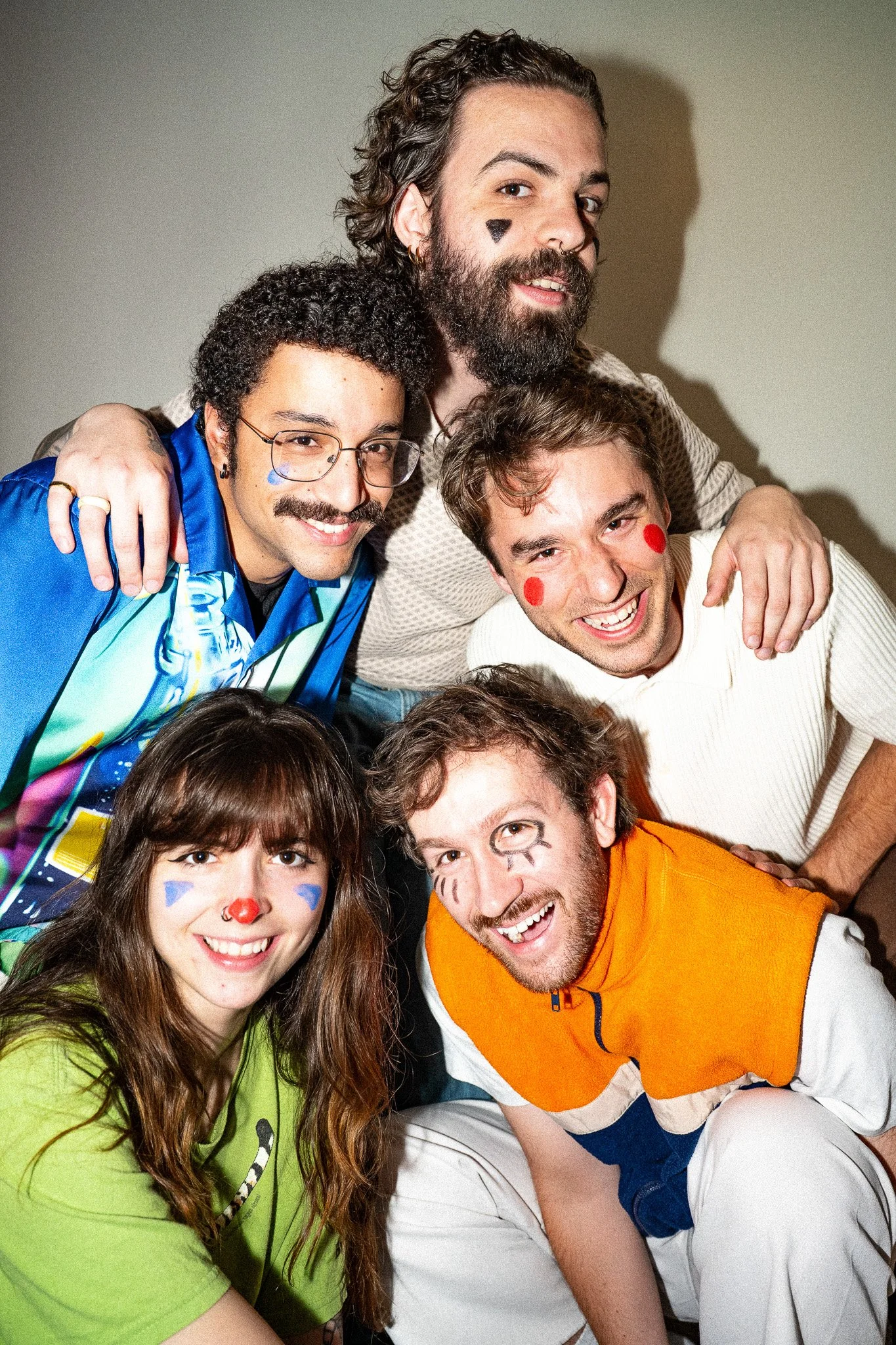
A: Without giving away too much, this next era for us lyrically and thematically revolves a lot around the jester/clown archetype in many ways, including shame, social performance, and perception. A bunch of the songs were already written before the theme was even chosen. I think naturally I was gravitating to writing about things in my personal life/our current social climate that naturally related back to the jester, so it seemed the most obvious aesthetic and thematic path to take for this new era.
Q: Were there any other aspects of a circus that you thought about focusing on before you landed on clowns?
A: Honestly the main thing that led to the circus even being mentioned in “the curtain” was because of the political metaphor mentioned before. When I first learned the phrase, I thought it was perfect because not only was it a metaphor that described exactly what I was trying to say, but it also related visually to this era’s aesthetics.
Q: If each of you were a specific clown, describe to me what clown you would be?
A(s):
Julia: court jester
Ben: sad clown
Matt: the hobo
Miles: machine elf
Jake: the joker
Q: How collaborative was the process of building the visual world around this release? Did everyone contribute ideas from the beginning?
A: When we first started writing the songs from this new era, we didn’t know what it would look like visually at all. The visuals then came naturally after the lyrical and thematic content started to develop.
Q: Is there any way that you feel your last album released a year ago influenced the way that you're approaching your current music and this single that you don't think would have been possible without that process?
A: Our last release “good grief!” totally changed how we write music. We had never written an album before, and had never been as intentional about anything we had put out before that album. We learned how to write multiple unique and individual songs that can stand on their own, while still thematically tying them together to create the release as a whole.
Q: In past interviews you've talked about wanting your music to stay emotionally honest. Has making this song changed your understanding of what honesty in songwriting looks like?
A: This song was a bit different to write than our usual material solely for the fact that I usually write from my own point of view rather than somebody, or in this case something, else.’At the same time, it still is my authentic feelings on the issue and viewpoint on the current state of the country and our society’s relationship with new technology.
Q: Where does this single fit in your discography? Does it feel like the culmination of what you've been building toward, or the beginning of something entirely different?
A: Honestly, both! None of these songs would exist without the work we have made in the past. We’ve spent years learning how to collaborate and developing our style. At the same time, a completely new project is always exciting. We want this project to grow into whatever it’s meant to be without putting any pressure on it to look like any of our past releases.
Q: Of what you can talk about what's coming next for Similar Kind that you're excited to share?
A: We’re back with loads of new music. We’ve got numerous songs we’re working on and ready to release ‘em. Let’s just say we’re gonna be foolin’ around.
Q: Out of your entire discography do you each have a track that you feel the most proud of or that feels the most to you?
A(s):
Julia: “let me go”
Ben: “search party”
Matt: “smirk”
Miles: “the curtain”
Jake: upcoming release “game of pool”
Q: Are there any ideas you've been finding yourself circling around that you still want to capture in your music and maybe haven't?
A: Honestly, there are so many things! This is something I’ve already written about in depth, but I still definitely see myself writing more about grief in the future. I know I mentioned this earlier, but the main thing that led to the jester concept was the fact that I was writing a lot about shame and feeling like a fool. So that’s definitely something to expect in this upcoming release!