
Nineteen Songs, One Week: Juan Razuri on Mixing Doechii’s Breakout Mixtape
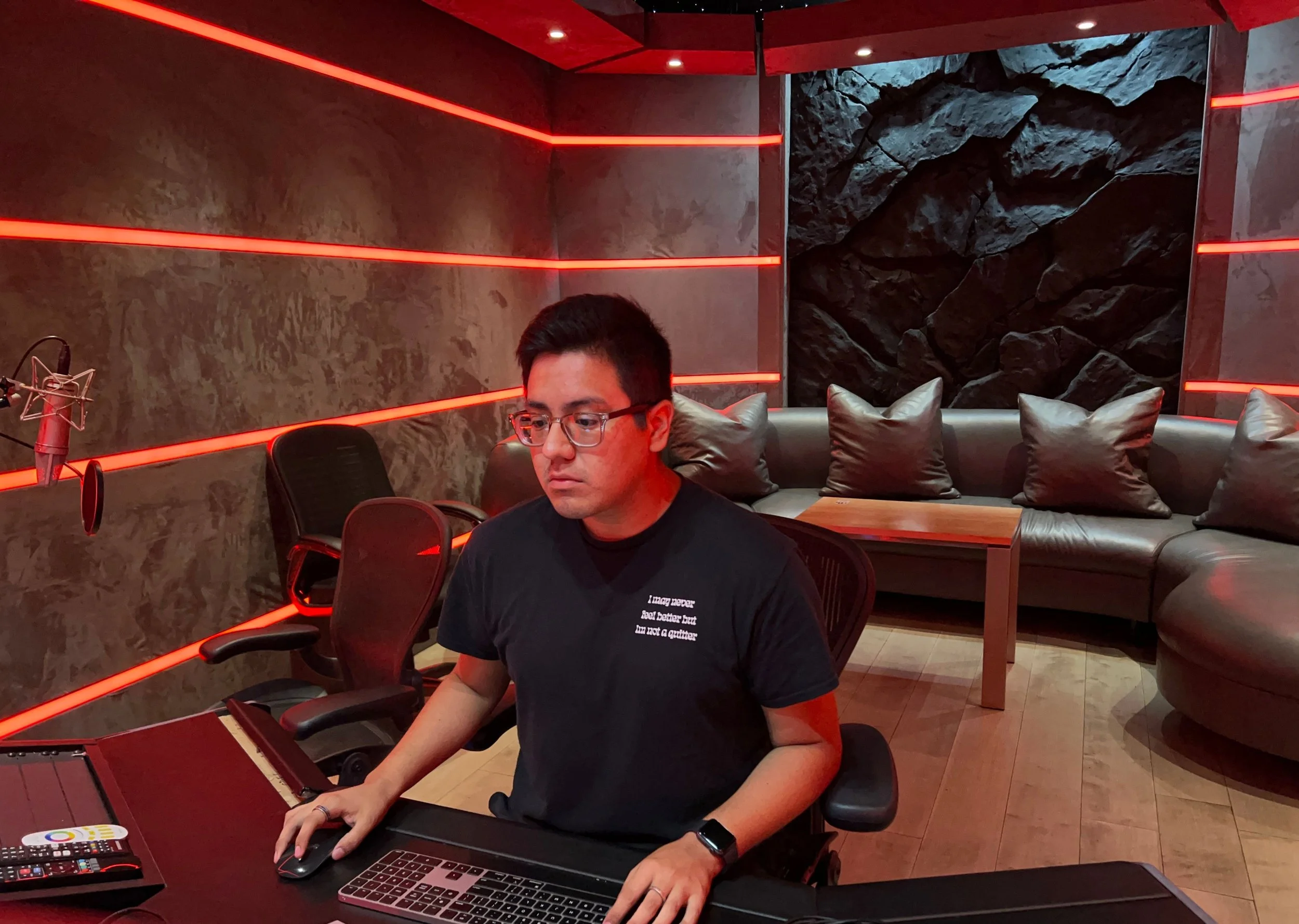
Juan was 22, fresh out of USC, and suddenly in charge of mixing a project that would go on to earn Grammy nominations.
He had one week. Nineteen songs. And a format, Dolby Atmos, that most listeners didn’t even know they were hearing.
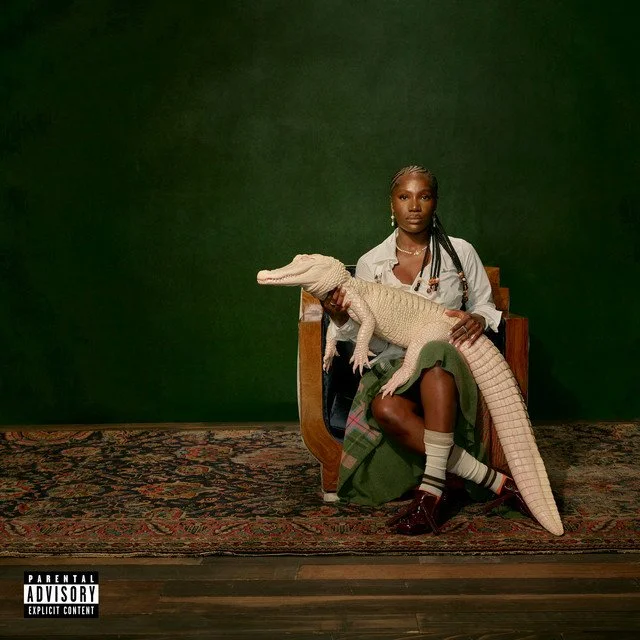
The result was Alligator Bites Never Heal, Doechii’s third mixtape and her most ambitious project to date. Equal parts urgent, chaotic, and deeply layered, it didn’t just mark a career milestone for Juan; it dropped him headfirst into the future of music mixing.
As Dolby Atmos becomes more standard across streaming platforms, engineers like Juan are defining what that future sounds like. From creative risks to technical breakthroughs, he’s helping push immersive audio beyond a niche format and into something more: a new creative language.
UPTIGHT: Can you tell me a little about your background and how you got started in music?
RAZURI: I was born and raised here in LA, specifically the Valley. My journey really started in middle school, playing violin in the public school system, where the music education was very performance-based.
Toward the end of high school, I discovered the world of music production and songwriting after working with a producer through a cancer survivor nonprofit. I'm a cancer survivor myself, and that experience opened the door to expressing myself through music.
At that point, I knew I wanted to pursue music professionally, but I wasn’t sure how. Classical violin is so competitive, and I realized I had started too late to really keep up in that world. That’s when I knew it wasn’t the right path for me.
I ended up applying to USC’s music industry program and got in. While I was there, I also pursued a minor in music production. I took a ton of classes in music business, production, mixing, and mastering, and really tried to figure out what I was best at. Over time, I realized I’m a better producer than a songwriter, and an even better mix engineer than a producer.
It wasn’t until the very end of college that I discovered Dolby Atmos and immersive mixing, and it just clicked.
I met people from Top Dawg Entertainment (TDE) through school, and they really liked me. They needed someone with my skill set, so after a few meetings and interviews, I interned with them right after graduation.
At first, I wasn’t sure if I'd get to do Atmos mixing, but eventually, Doechii’s mixtape was coming up, and they needed a quick turnaround. They asked me to try mixing the first single, "BOOM BAP."
After I finished it, I checked in with the team, and they really liked it. I also connected with the stereo mix engineer, Jayda Love, and another engineer, Brian Schwaller. Jayda asked me to send over some of my past work, and a few days later, she emailed me, "I’m sending you all the files for the album in the next three days." I was like, Oh my God.
The mixtape came together really fast. Some songs had been around for a while, but most were completed within a month. The stereo mixes had a super tight turnaround, and then I came in last, doing all the Atmos mixes in just one week.
At the time, I had just learned about Doechii and how cool her music was. She already had around 5 million monthly listeners, which was amazing, but now she’s at 45-50 million. It’s been insane to be part of it. Every step of my life brought me to this moment.
UPTIGHT: How did you feel having to get all that done in such a short amount of time?
RAZURI: I felt extremely excited. I was having a lot of fun, but at the same time, I was super stressed because it was 19 songs with a really tight deadline. Even now, with all the projects I've done since, nothing has had a deadline as tight as that one.
It was a mix of emotions. Creatively, I was having a blast. Every new song I got sparked so many new ideas.
On top of the time crunch, there were limitations on the files I could use. Some producers had missing or corrupted sessions, especially for older tracks, so sometimes I didn’t have everything I needed for immersive mixing.
Ideally, I would have access to all the instruments and vocals separately so I could move things around and really have fun with it. But sometimes I only had isolated vocals, and all the production was stuck in a single track. I couldn’t manipulate it the way I wanted, which was frustrating, but a lot of it was out of my control and the team's.
In a way, that limitation forced me to be even more creative than I had ever been before. It was challenging, fun, stressful, and such a great moment to express myself. It really was all of those things at once.
UPTIGHT: What excited you most about the project?
RAZURI: This was all happening right as I was just starting to become a fan. A few months earlier, I hadn’t even heard of her yet.
Already, the music for the mixtape felt so different from the stuff she had released before. It was like an advent calendar. I didn’t get everything at once. I would get batches of songs, maybe three or four at a time, sometimes even just one, and every time it was like a new surprise.
I’d hear a new track and think, whoa, you're going for some MF Doom here, or you’re giving off Doja vibes, or leaning into R&B, or straight rap. It was so refreshing. That’s the word that just kept repeating in my mind.
Then, when the topic of the Grammys came up, it hit me: no way, I’m involved in something that could actually win a Grammy. No way.
Even though I didn’t realize yet how far it would go, I knew from the start that this project was special. It was nostalgic and familiar, yet new and refreshing. It felt exciting and important.
The music was super unique, and that’s a huge testament to Doechii’s ideas, Jayda’s stereo mixes, all the different producers, the A&R team, and the creative people at TDE who brought it all together.
UPTIGHT: How collaborative was the process? Is it something where you were primarily thrown into the fire and working alone, completely? Or was it something where you had a lot of people, like talking back and forth with you on what to do?
RAZURI: In the beginning, for most of it, I was mainly just trusted creatively. Especially after “Boom Bap.” Once they heard that, they knew I had the skills, so I just went ahead and did everything myself.
After I had finished the bulk of it, I started sharing my mixes with the two other engineers, Jayda and Brian. They gave me some notes, but it was mostly technical—not really creative feedback. Stuff like, “Hey, can you clean this up a bit?” or “Maybe lighten the EQ here,” or “Lower this one percussive element just a touch.” Things like that. Minor fixes, but they definitely added up and helped bring it to that next level—like five to ten percent better.
There were a lot of notes going back and forth between us, and that was the most collaborative part of it. Especially with Jayda, it was interesting to see her adapt to Atmos. She had to change her mindset and realize, okay, this isn’t stereo. It’s a different space.
I remember this one moment where she went, “What’s going on here? Something sounds weird in this section,” and I explained that it was a choir gang vocal effect, moving closer to the listener over time. I think it was in “Boom Bap.” And she was like, “Ohhh, okay, that makes sense.” Once she understood what was happening, she’d suggest adjustments based on how it was coming through for her.
Later on, we got to meet up at a really great Atmos studio near us, Dolby’s studio, and we listened to some of the mixes together in the room. It was the first time we got to hear them like that in person, and just an hour in that space really changed everything. You could see it click for her immediately. She started seeing all the possibilities and was like, “Oh, now I get why you made that decision.”
We started bouncing ideas around, like, “We could’ve done this,” or “What if we had tried that?” We also listened to some music outside of the Doechii project and compared how different things sounded in Atmos. So yeah, it’s really been this whole journey of figuring out what we can do together in this new space outside of stereo.
UPTIGHT: For people who might not be familiar with the mixing world, how would you describe your role? And what is something that you can do in Dolby that you can't really do in stereo?
RAZURI: Stereo, as most people already understand, is just left and right. That’s how we listen to almost all music, whether it’s through speakers or headphones. Sometimes we even hear things in mono, just one channel. And many people remember when the stereo first came out decades ago.
Take The Beatles, for example. They experimented by putting drums and bass all the way to the far left, and guitars or strings all the way to the far right. It was extreme panning, just people figuring it out, being experimental, and seeing what worked. So, stereo is mostly left and right, with a little bit in between, especially with vocals usually placed right in the center.
Dolby Atmos is like that, but taken to another level. It’s full 3D immersion. You can place sounds not just in front of you, but around you, beside you, behind you, and above you. There's height too, so you can even push sounds up toward the ceiling.
Once you understand that concept, it opens up so much more space. Stereo still has a special place in my heart, but Atmos has changed how I hear it. In stereo, space is tighter. Things can get lost or compete with each other, different voices or instruments might be fighting for attention.
But in Atmos, everything can spread out. Each sound gives the room a chance to breathe. We don't like being sardines in a subway car, right? That openness creates a better mix experience.
If you listen to Atmos mixes of older songs, I’m not sure if this one’s been released, but I heard a version of Buffalo Soldier a year or two ago. You’ll notice background vocals and instruments that you don’t hear clearly in stereo.
Plus, there's a creative side to it, too. In “Boom Bap,” for example, at the very end, there are choir vocals that come in and fade out. They sound like they’re slowing down, and I placed them kind of in the middle of the room at first. Then, as they fade, they move past you. It sounds so sick.
Atmos is deeply tied to film, too. Think of a helicopter flying into a shot. You can have the sound follow it across the theater.
There’s a song I did, not for Doechii, but for Ray Vaughn, another TDE artist. There’s a car sound in it, and in stereo, it just zooms from left to center. But in Atmos, I set it to start from the back of the room and move forward. You feel it. It doesn’t just move sideways; it feels like the car is in the room with you.
I'm such a nerd for this stuff, but that’s the power of immersion. It makes you feel like you're in the song. You can definitely be immersive with stereo too, but Atmos takes it to a whole other level.
UPTIGHT: That explanation is really cool. As someone who has kind of dabbled in listening to Atmos, especially when it was released on Apple Music, and with my AirPods, it's really awesome and exciting to listen to music in that format.
In your role, regardless of the other projects you've worked on, do you usually have a lot of creative freedom?
RAZURI: Yes, I usually do, but I’m really looking forward to seeing how that changes as more people understand the format. As more people get exposed to it and become more knowledgeable, especially producers and artists, I think that collaboration will grow.
There are already some artists and producers who are more familiar with it and want to be more involved in the process. When that happens, there’s usually more back-and-forth and creative input. That might mean there's a little less total creative freedom for me, but it's balanced out by how collaborative it becomes, which is exciting.
I’m looking forward to that being more common in the near future. It feels inevitable as more people discover the format and want to work together to make it the best experience possible.
UPTIGHT: On the album, were there any tracks that were particularly challenging or exciting to mix?
RAZURI: Definitely challenging. The whole context I mentioned earlier played into that, especially when it came to mixing with limited files. The best example of that would be “Nissan Altima.”
Production-wise, “Nissan Altima” is a really simple song. It’s her lead vocal rapping hard over the beat, with some background vocals and maybe one or two ad-libs, that’s it. Compared to other songs that are longer and have a lot more going on, this one was pretty stripped down. The arrangement is repetitive, and the files I got were super limited. All the instruments were on a single stereo track, so I couldn’t separate or move anything around. I had the beat, the lead vocal, and, luckily, the way they arranged it helped, but it was still the least creative mix in terms of flexibility.
So I had to ask myself, “What can I do with this?” I listened closely and figured it out. For the chorus, since stereo is just left and right, I pulled the vocal into the center of the room so it feels like she’s right next to you. It made a big difference. The small things count too. Her ad-libs are such a signature for her, even though they only happen twice in the song. I made them fly over your head as they pass right above you. So even with those limitations, I still found ways to make the mix immersive. That’s a great example of how, when your hands are tied, you actually get more creative.
As for the most exciting one, that would probably be “GTFO,” the song with KUNTFETISH. I was giddy when I got those files because there was so much to work with, but weirdly, it meant I couldn’t move things around too much. There just wasn’t as much space. I had to be more restrained, even though the mix was packed.
There’s this Adobe software we use where every sound is represented as a little circle in 3D space. On that song, it was completely full, just everywhere. The chorus is loaded with background vocals and even some male vocals, mixed in by another engineer friend at the label. You’re completely surrounded by Doechii, KUNTFETISH, and Julian’s background vocals. Some are up high, some are low, some are tucked into the corners; it’s wild. Then there’s this moment when KUNTFETISH comes in, and her echoes pulse behind you. It’s super cool.
But honestly, every song had something exciting. Each one had a moment that made me smile or geek out a bit. There were 19 tracks total, and I wouldn’t say there were major creative risks, but there were tons of small ones that added up. I’d say almost every song had some little detail or moment where I thought, “This might be a bit out there,” but I went for it.
A lot of that has to do with how I mixed nearly the entire album using headphones, which is a whole other technical conversation. The software creates a virtual room, allowing you to mix immersively even without being in a physical space. I was only comfortable doing that because I spent months training and learning in actual Atmos rooms, so I know how things translate.
That said, there were still moments where I was like, “Okay, this sounds dope in headphones, but I have no idea how it’s going to hit in a real room.”
One example that stands out is in “Denial is a River.” There’s this moment in the middle where she says, “Everything’s okay,” kind of like she’s talking to a therapist. Then she says, “Nah, fuck it,” and in the stereo version, there’s a bunch of reverb, but in Atmos, I decided to do something different. Right when she says “nah, fuck it,” I moved her vocal from the front of the room to right beside the listener, then pulled it back to the front. I had no idea how that would translate until a few days ago, when Jayda and I were listening in the studio. When that part came up, I’d totally forgotten I did it, but we both had the same reaction: “Whoa.” It was so sick.
That moment really showed me how even the smallest, most subtle choice can shape the whole experience. And honestly, that’s what the whole project felt like—just a bunch of tiny creative risks that ended up paying off.
UPTIGHT: Would you say that as a track that you feel like you really got to showcase what you do?
RAZURI: To the best of my ability, yes. Like we were saying earlier, only a few songs were the kind of perfect, textbook situations where I had everything I needed, where I had all the files and total freedom. That was one of the biggest challenges with this project. For most of the songs, I didn’t have that.
If I had been given more files to work with, I definitely could’ve done even more. There was just a natural restriction, and I had to work within those limits. But I’m really proud of the creativity that came out of that. Even with my hands tied in certain ways, I still found a way to make it work.
And on top of that, I had just a week to do it all. Considering the time and limitations, I’m very proud of how it turned out. In a different world, sure, it could’ve gone even further, but either way, it was a great experience, and I’m really happy with how it came out.
UPTIGHT: What was it like to see this project recognized with a Grammy?
RAZURI: Insane. It was absolutely crazy.
It didn’t really hit me until a few months later, when I realized the Grammy submission period was coming up. I started talking to people at the label, asking, “What rap albums came out this year?” I was thinking about it, comparing and contrasting things, and it just clicked. Wait... with how successful the album has been, and how creative and, again, refreshing it is, I thought, we actually have a real chance.
I remember thinking, holy shit, we might get nominated. This could actually happen.
When the nomination day came, I was literally sitting a few feet from where I am right now, at my dining table, eating breakfast in my pajamas. It was early morning. I had the livestream on, and I was watching it like, no way... maybe... no way. Like that Brittany Broski meme, you know, the Kombucha Girl? Wait... wait...
Then they announced the category and the album. And then more nominations came: Best New Artist, Best Rap Performance. I lost my mind. I was freaking out. I was so happy.
Unfortunately, I wasn’t able to go to the ceremony in person. I really tried to make it happen, but it didn’t work out this time. Hopefully in the future. But I watched it with my family at my aunt’s house, and I’ll never forget it.
It was early in the ceremony. I was losing it. My mom was bawling. My family was crying. We were all just in shock.
Then Doechii performed, and I think it was shortly after that moment. I was like, yep... that’s it. She absolutely killed it.
And then seeing Billie Eilish, and everything else that night, I had to just sit there like, oh my god... that was sick.
It still feels surreal. Doechii deserves her flowers. The whole team deserves their flowers. It was a team effort, and I’m so proud of all of us who were involved.
UPTIGHT: Did you have a feeling that the album would resonate like that?
RAZURI: Over time, yeah. As more attention came to it, as more things were happening and momentum was building with Doechii, more people were catching on. The album, as a whole, just kept getting stronger and stronger.
Her project had that youthful, revolutionary spark.
There’s something extra special about it. And the fact that it’s a mixtape, not even technically treated by her as an album? Holy shit.
It became more obvious as time went on. And culturally, it was surreal to watch the growth. More and more attention kept coming to her and to the project. When it first came out, I felt like most people around me didn’t even know who she was. Only a small percentage really had her on their radar.
But by the time the Grammys came around, I felt like everyone knew. And now, with everything that’s happened since, especially with Anxiety, it’s like everyone knows her. And it’s so sick. It’s like, how did that happen?
Our culture is wild. With the internet, there are no borders. Things just spread and get shared so quickly. It still shocks me.
She brings up great topics in her music, and she does it in such creative ways. She sparks dialogue, interesting, meaningful dialogue.
I’m just in awe. I’m really humbled by everything.
UPTIGHT: To reel it back into the talk about Atmos as a whole, since it seems to be having a moment right now with Apple Music and Tidal, do you think that spatial audio is the future of music?
RAZURI: I'm so happy you asked. I could talk about this for hours. There's something really interesting happening right now, and it's worth paying attention to.
The short answer is yes, absolutely. Dolby Atmos is already becoming a standard. The major labels understand that, which is why they’ve adopted it. They're playing it safe right now, but even though Atmos has been in film since 2012, it only really became a thing in music around 2021 or 2022, mostly thanks to Apple Music pushing it forward.
But here’s the catch. Spotify, the number one streaming service, still doesn’t have Atmos. That’s a huge piece of the puzzle. I’ve seen people online talking about it. Some say they’ve been randomly selected for beta testing. I’ve even seen Adobe logos pop up in Spotify, prompting people to wonder, “Wait, what’s going on?”
These are public rumors, but it seems like something is happening behind the scenes. Once Spotify joins in, the impact will be even bigger.
Before Atmos, there was 5.1 surround, kind of like the immersive precursor. That worked for film but didn’t catch on in music, mostly because it required people to have multiple speakers in their homes. It wasn’t accessible.
That’s where Atmos has the edge. The big equalizer is binaural audio, which lets you experience an Atmos mix through regular stereo headphones. You don’t need fancy gear. You don’t even need AirPods. If you have Apple Music, any headphones will work. The accessibility is through the roof.
And now there are great home setups, like with Sonos. With just a soundbar and two other speakers,three total, you’ve got Atmos. The system bounces a signal off the ceiling to create that sense of height. It’s wild.
The auto industry is catching on, too. Cadillac, Rivian, Mercedes, they’re all incorporating Atmos into their vehicles. There are cars on the road right now with Atmos support. It’s only going to become more mainstream.
That’s the business side of it. All the big tech and consumer companies are already heading in that direction. Apple is especially pushing it hard. Sure, some of that might be to sell more AirPods or hardware, but their influence is massive. What they do affects the entire industry.
That’s where tech and music intersect in a huge way.
Creatively, I think we've made it clear in this conversation. Atmos is a blank canvas. There are so many new and exciting ways to express yourself and do really cool stuff with it.
Apple’s immersive headset is another piece of that puzzle. Right now, it’s expensive and clunky, like a first-gen product. But it reminds me of when people used to mock the iPod Nano for being tiny, or laugh at people who wore it like a watch. Fast forward, and now the Apple Watch is the best-selling watch in the world.
The headset might seem ridiculous now, but give it a few versions. They’ll refine it, and they’ll keep pushing it. I've even heard that the one thing they really got right with the headset is how incredible it is for watching film and listening to music. That tells you a lot about where entertainment is going.
As entertainment becomes more immersive, audio will evolve along with it.
So yes, I absolutely think Atmos is the future, and it’s only going to get more accessible.
Now, culturally, that opens up a whole other conversation. Are artists thinking differently about how they want their music mixed? Some are, for sure.
But not everyone is excited about it. Some artists feel like it's being forced on them. Others have had bad experiences; maybe they heard an early Atmos mix that wasn’t done well, and now they’ve written it off. That’s understandable, but things are evolving fast.
The Atmos mixes being released today are so much better than the ones from 2021 or 2022. The innovation, the experimentation, the support from Dolby as a company, and the community of engineers learning together, it's been incredible.
Of course, there are still amazing mixes from that early era, too. But overall, the quality is growing quickly.
Some artists are skeptical, but others are fully on board. Some are like, “Let’s go, give me more Atmos. I want everything in Atmos.”
Then there are artists who treat it like a checkbox: “Okay, now I guess I have to do an Atmos mix. Just like I have to do a Canvas for Spotify or animation on Apple Music covers.”
There’s a lot happening culturally in the creative world, and it’s worth paying attention to. This is still the early stage for Atmos in music, but it’s going to keep getting better.
I hope to be part of the solution. I want to educate and share. I love working with big artists on exciting projects, but part of my mission is to stay accessible to independent artists, friends of mine, and up-and-coming artists.
I want to be someone who says, “Here’s why you should care. Here’s what’s possible with Atmos.” I want this to be something that’s easy to access and understand, but also exciting.
There’s a lot going on, but it’s all really interesting. And yeah, this is just the beginning.
UPTIGHT: Is there something that you wish more listeners or even artists knew or appreciated about immersive mixes?
RAZURI: If I'm not wrong, there’s definitely a large percentage of people, especially Apple Music listeners, who are overlooking it. On Apple Music, Atmos is actually the default listening format if all your settings are left untouched.
I'm not sure how it works on Tidal or Amazon Music, but on Apple, there’s probably a big chunk of people listening to songs in Atmos without even realizing it.
When Atmos first launched on Apple Music, there was a lot of marketing. But now, they haven’t really pushed it in a while. It’s just become a standard part of the Apple Music experience.
I guess my only wish is for people to realize that if you are listening in Atmos, and you very well might be, just be aware of it. That way, you can listen a little more attentively and appreciate the creative decisions.
Like, why is that one sound moving around? Where is that instrument placed? Whoa, what’s happening behind me?
It’s actually really cool when someone doesn’t realize they’re listening in Atmos, and then suddenly it clicks because of one of those moments.
I know it’s a weird ask, but if you’re aware that you’re hearing an Atmos mix, and you know what that means for your experience, take a second to really listen. There’s a lot going on around you, and that awareness can make the whole thing even more special.
UPTIGHT: What is something that you've learned through the Doechii project that really stuck with you?
RAZURI: A lot of things. It really helped me, as a young aspiring engineer, learn a lot about how labels work in the real world. A lot of times, there are last-minute deadlines and new changes, and mistakes are made. Learning how to adapt to these things going all over the place and just, yeah, just seeing how internally things work.
That's a bit more of a unique situation for me because I am TDE's in-house mix engineer, I’m always there, and I'm always with the team. So it’s just that experience, being surrounded by that, and it is really illuminating, especially because I come from a music business education foundation. So I'm always appreciative of that, and I know a lot and understand what's going on and the terms being thrown around.
And then in the actual mixing, I learned how to mix fast, like, never before. When I started, it took me much longer, and now I'm way more efficient. There are things that I discovered that I like doing in all my mixes, there are these new tricks and things that move.
I feel like I've created my own style in a way, and just that whole experience of working in a not textbook-perfect situation, adapting to new limitations like I never had before, and still being very creative in those situations.
This mixtape gave me so much experience as a young engineer, so it’s just too much to name. It’s a ton of small things, you know, but I learned so much, and I've only grown more and more since then.
UPTIGHT: In what ways have you developed your own style? What does that mean in terms of Atmos mixing?
RAZURI: I guess I just mean different movements and placements for instruments and vocals.
This is very mixy stuff, but I’ve learned how to preserve the tightness and punch of the stereo mix and be respectful of it. The stereo mix is the anchor, and with Atmos, you're building on top of that. You're not starting from scratch; you're building on the work of the stereo mix engineer and the mastering engineer.
Their decisions point me in a direction. Sometimes it's like, oh, they did that, so clearly I have to do this. It all starts there.
There’s a lot you can do. I know some engineers, for example, who like putting the kick drum and bass in all four corners, really wild stuff. It's kind of the Wild West right now when it comes to style and creative decisions.
I don’t usually do that. Maybe I’ll experiment with it in the future, but when I mix, I stick to a certain structure.
I think with Atmos, more than ever, there’s room to have your own style. It gives engineers a new way to express themselves,and that’s what makes it so exciting.
UPTIGHT: Do you have any advice for any producers who might be starting to work with Atmos mixing?
RAZURI: When I first started, I had an incredible teacher and mentor who was very experienced in Atmos. Something that was always on my mind was that there’s so much space. Where do I even put everything? What works? Is there a standard?
With stereo mixing, there are some basic guidelines. Like, don’t put all your drums or percussion in one ear. Keep the bass and kick drum centered. It’s more about panning and balance. But with Atmos, we weren’t really told any rules, which gave us the freedom to explore creatively.
That said, I think the number one tip is to trust your gut. If something doesn’t sound right, change it.
At first, it was intimidating, just figuring out where to start. But little by little, I found what made sense to me. I’d hear something and think, “Yeah, that sounds good. I like that.” I’m still developing my own style, still evolving.
Another big tip: listen to other mixes. Pay attention to how other people are using the space, how they’re doing things differently. Let it inspire you, and use that to experiment with your own ideas.
I still do this constantly. I’ll hear something and think, “That’s cool. I want to try something like that.”
One great example: I was listening to the Atmos mix of “Señorita,” the duet with Shawn Mendes and Camila Cabello. It’s technically his song, but in the Atmos mix, his vocals come from behind you while hers come from the front. I haven’t done anything like that yet, but it really sparked some ideas.
And with electronic music? Oh my God, it’s like it was made for Atmos. That genre and this format are a perfect match. You’ve got wild sounds moving all over the place, and it works so well. There’s so much to be inspired by, and I’m constantly discovering new ideas I want to try.
Sometimes I hear something and go, “I like this,” or “Actually, I think I prefer how I did that.” You start to build your own approach. Trust your gut, study what others have done, and use that to make something new.
Also, and this part’s important,don’t be afraid to ask for help. We’ve been talking about the fun stuff, but there are a lot of technically complicated things going on under the hood.
I’ve paid my dues. I’ve spent hours fixing issues and figuring out how everything works. This is complex technology, and if you’re not careful, a lot can go wrong.
So yeah. Inform yourself, stay curious, and most of all, have fun.
UPTIGHT: What would you say to a listener who is just starting to experiment with spatial formats? Do you have any recommendations for enjoying it properly?
RAZURI: I don’t think there’s just one way to properly enjoy it. If you can get into a room, an official Atmos mixing room, that’s always going to be incredible. But for most people, that’s not easy.
When I say “room,” I also mean something like a home setup. If you know someone, or if you’re down to invest in something like those three-speaker setups I mentioned earlier, like with Sonos, for example,that can be a great experience too.
But honestly, if you’ve got headphones, you’re good. There’s not really a specific way I’d say you should enjoy it, but a proper room will always give you the best results. Headphones, though, are the next best thing.
Something cool I like to do sometimes, not all headphones can do this, but I know the AirPods Pro 2 and the AirPods Max can, is use the head tracking feature.
I don’t like listening to it all the time, but I’ll use it to explore the mix. I’ll toggle it on, turn my head, and suddenly I can hear a percussion element coming from behind me. I can feel where things are placed.
It gives you that sense of being in a physical space. Like in a real room, you’d want to turn your head and hear what’s happening behind you. If you don’t have a room setup, head tracking is the next best way to explore what’s going on around you.
That’s a great way to appreciate what’s happening, especially if you’re curious about what’s going on in the mix.
Apple Music has done a really good job of putting together playlists featuring some of the top songs across different genres available in Atmos. Doechii’s in the hip-hop one, for example.
You’ve got playlist curators specifically looking for great Atmos mixes to showcase, making it easier for listeners to explore.
And just to top it off, “Rocketman” is a really great mix. From what I understand, it’s actually the first official Atmos mix ever made, and it’s really sick.
UPTIGHT: Do you have any upcoming projects that you're excited about?
RAZURI: Absolutely. Check me out on Instagram (@jcr_music_), I’m always posting about the work I do. And definitely keep an eye on what TDE puts out in the future. There’s always something in the works.
I’m also always on the hunt for new music to work on outside of TDE, too.
There’s stuff on the agenda that I’m really excited about, and I’ll be able to share more soon.
UPTIGHT: Where would you like to see your career go next?
RAZURI: I’d love to get to a point where I’m known and trusted by as many labels, artists, and independent artists as possible, to be the go-to guy for this kind of work.
I don’t care about fame. I just want to do my best and be as close to the best as possible. There are so many incredible mix engineers out there, but there aren’t a lot of us working in Atmos.
So yeah, becoming more known in the business and being able to work on more cool stuff, that would be incredible. It would be an honor and a privilege to help elevate really great music with immersive mixing.
Just being trusted to do that, and having more opportunities to do it, would mean everything.