
Lowertown talks Body Horror, Chronic Illness, and Having Fun
Lowertown is an indie rock band formed by 24 year old members Olivia Osby and Avsha Weinberg. Having only begun making music together in high school, the Atlanta, Georgia-based duo has grown with this band from their adolescence into adulthood.
What called me to their work was not only the way they prioritize lyricism and truly make their point come across to an audience, even if it is in ways that don't always sit comfortably, but also the way they can pair this with images and visuals that are haunting as they linger.
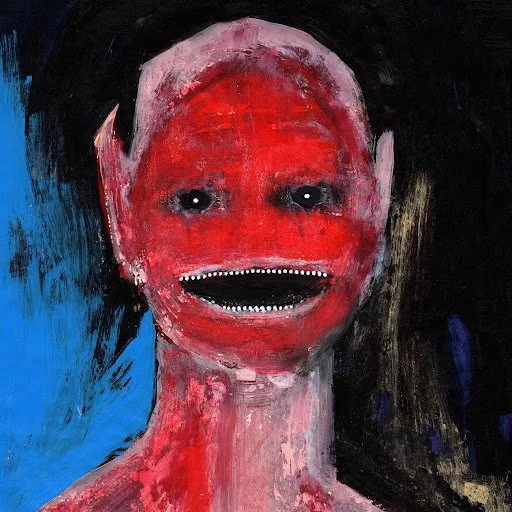
Examples of this include their cover art for The Gaping Mouth, which features a person with their face completely torn off, leaving behind a sea of red and gaping teeth, as well as music videos for some of their popular tracks, including "Best Person You Know," which integrates these eerie faces into otherwise calm moments where b-roll typically features standard actors or appearances of the the artists. Other tracks that continue this theme outside of The Gaping Mouth are from their more recent project, I Love To Lie, which features tracks like “Antibiotics,” which references slaughterhouses painted in blood and skin being torn away from the body. Not only do they not shy away from body horror imagery, but it is also laced across their lyricism itself to get their message across. While doing so, it pairs tender topics like love and self-discovery creating a blend you can't look away from.
Across the work they've released during this time, the band experiments with sounds both within indie music trends and in their own style, allowing the emotions of the songs to come first rather than music theory, creating a sound that is both unique and story-centered through longer lyrics.
Their discography consists of two albums and three EPs; it is through this body of work that they've been able to develop from a soft sound into a more heavy and grunge evolution of the topics they dig into, including body horror, “a subgenre of horror fiction that focuses on the grotesque, visceral, and terrifying transformation or destruction of the physical body,” that helps to explore elements like chronic illness.
Not only has their sound changed, but so has their journey. Through their work in the music industry, they have signed with a label and, in recent years, have had to navigate living on their own in New York City for the first time, after growing up and becoming accustomed to life in Atlanta.
In 2024 and 2025, the indie music scene has embraced genre fluidity and mood-driven aesthetics, increasingly favoring raw emotional expression, textured soundscapes, and DIY-friendly production over polished, genre-specific songs. Many artists blend elements of shoegaze, grunge, lo-fi, and ambient rock or electronic atmospheres. Accessible home-studio tools, along with the democratizing effects of streaming platforms and online communities, have propelled this trend.. Platforms like TikTok, streaming playlists, and algorithm-driven recommendations have reshaped how listeners discover and engage with new music, enabling underground or emotionally intense artists to find devoted niche audiences even without major-label backing.
Lowertown exemplifies this shift. Their music combines grungy weight, atmospheric distortion, and raw, often unsettling lyricism, including body horror with personal themes of love, identity, and self-discovery. They combine emotional vulnerability with sonic risk-taking, placing themselves among a wave of indie artists who reject rigid genre boundaries in favor of immersive, mood-driven experiences that resonate with listeners seeking depth and authenticity.
As the indie scene continues to prize texture over trend and honesty over polish, Lowertown’s work feels at home in this musical landscape.
To understand not only this evolution but also how projects like The Gaping Mouth and I Love To Lie have come to the forefront, I sat down with the artists to discuss their creative process, and the best place to start was the beginning.
Q: Where did your love of music really begin?
Avsha: My love of music started when I was really young. Both of my parents really loved music, and my dad played jazz piano, so I grew up surrounded by the arts. I was exposed early on to folk, electronic, and a lot of classical music. I grew up playing piano and other instruments, doing the young musician kind of thing
Olivia: I got really into music in elementary and middle school. I was the weird, shy kid who didn't have many friends. So I ended up getting into emo and pop punk bands. That became my obsession and my comfort, rather than having a lot of people to hang out with. I really related to it. It started there with just being an angsty, young, weird loner kid. I'm still that definitely, and just hiding it in different ways– or not. I think my music, in some ways, has developed into the music that I would listen to to comfort myself when I was a kid. The natural progression of the angsty teen.
Q: I know that you started releasing music together for Lowertown in high school and were even making solo music before that, and it sounds like you both found your influence from music really young. How would you say that your writing process, or even your sound, has developed over time, especially since you began writing so young?
Olivia: I think we've both matured a lot, and I feel like over the past few years, some big changes have happened. We've both let go of our pride and approached music with a lot more humility. We both came into writing with well-developed skill sets. Avsha has been extremely technically proficient ever since I've known him, and even before. He's an exceptional musician across most instruments and has a vast knowledge of music theory and an understanding of music that I will probably never have. Which is really cool because he brings out and elevates what I do. [When] I approached music with him at the beginning, I think my strongest skill was that I was really good at the lyricism and the poetry. I came into it as a vocalist because I was not skilled in other instruments. I had just started learning guitar. I could barely play guitar when I knew him. So we came with these very developed sides of ourselves. But as we've gotten older, we've worked on bridging the gap in what we weren't as strong at.
Now, as an instrumentalist, I feel very confident in my abilities, and like I have a lot more to offer than I used to. I think Avsha has become much more confident in his singing, lyricism, and other areas, which has made us much more well-rounded musicians. We have just a lot more to share and to exchange when we write. We both used to have specific roles with Lowertown. I would write the lyrics and sing, and then Avsha would write the instrumentals and produce. Now I feel like we're both very confident and very self-assured in more aspects of music. But we’ve been humbled, grown, and matured to the point where we don't just have these defined roles. We're much more open to taking suggestions from each other, and the places where we felt more developed have just made it a lot more interesting and fun. I'm starting to bring things to the table more instrumentally, and he's starting to bring things to the table vocally and with lyricism and other things. And it's a lot better now. It's a lot different. It's not just the same formula of writing a song now.
Q: Since you've been doing that more and blending into both sides of the music, what has it been like to step away into your solo music, and how do you feel that's influenced your creative choices that are exclusive to Lowertown?
Olivia: I feel like it's really fun to have projects outside of the band, because it allows us to do things that don't specifically make sense within the world of the band or the other one wouldn't exactly want to do for the project, because we have certain tastes and a certain vision for every Lowertown album, and I think creatively, both of us have an insane amount of overlapping interests and vision with what we would like to do, and also just things that we enjoy listening to and enjoy creating. And then we also have things we like outside that shared space. We have a few things we’ve also been wanting to do creatively that don't really make sense for this project, or they don’t align with the other ones' sense of what [Lowertown] means. It’s allowed the band to be very curated and focused, and we're not just slapping a bunch of songs together and putting them on an album. The albums are very intentional, and that's also because we have a space to create outside the album, where not every song we write has to be on this one project. It also alleviates that pressure and that tension between us. If I really have an idea I'm set on and Avsha doesn't want to do it, it can still exist elsewhere. I think it's been really fun because we've been writing together just non-stop for so many years, and it's been fun to take a breath to have that self-exploration and uninhibited creation where we don't have to compromise for anybody. You know, it's just doing what we want, without having to talk to anybody else or have anyone interfere. That's really fun because it's allowed us to branch out and do the things we've always wanted to do, but haven't been able to with Lowertown. Avsha has been working on a whole piano album, which wouldn't really make sense for Lowertown if he were writing these fifteen-minute piano pieces. But within the world of Avsha and just the world of music in general, it makes so much sense, and I'm so happy the world is a better place that exists. Then we come back, refreshed and excited to write together, not burnt out. And there's no pressure to make every single thing we want to do happen together. It can exist in the world, in parallel.
Avsha: I think delving into the solo projects was like us checking each other and being like, ‘Are we feeling totally fulfilled creatively?’ And making sure we are exploring any avenue that we're excited about or learning about, because we started so young. You grow so much in a matter of years. So you want to make sure that each person feels creatively fulfilled, can grow and become better musicians, and can explore everything they want. The solo thing has been really important in making sure there's no creative resentment and that nothing is left potentially untouched for any compromising reasons. So it's a personal health thing to explore the solo project route.
Q: I know your most recent project that was released under Lowertown in terms of an EP was Skin of My Teeth in 2023. What would you say the project taught you as artists together that has informed the current music you might be working on for Lowertown?
Avsha: It gave me a new sense of freedom with what we're able to put out, because that was the first [EP] after years of being on a label. So it was kind of a revisit to the excitement and the feeling of being able to explore anything we had when we first put out music. I think it was a chance to reopen the door to no bounds, releasing, writing, and entertaining ourselves, just making ourselves laugh and feel good. I think that was pretty important in the Lowertown discography as kind of the next phase of music, the next era of music, which was, I think, fewer boundaries, less intensity, and more of us exploring anything we really want to.
Olivia: Yeah, I think for me it was definitely a practice in not overthinking everything because often when we started music, I think one of the most magical things about us working together at such a young age was that we had no context for how people approach music professionally and on the business side. We would do things because they felt good and were fun, and we just put them out, and we were so not self-conscious at all. The most beautiful thing for an artist is not being self-conscious; the most beautiful art comes from people who are not thinking about their art in terms of success. Sometimes, inevitably, it's really hard to keep that pure mindset as you get older and experience the real world as a “professional musician.” Being so involved in the industry and all these arbitrary rules and structures, we don't need a lot of these antiquated structures that used to be necessary to get your music out there; they destroy that purity and that naivete. And it destroys something that makes much of the best art possible. I think [Skin of My Teeth] was the first project of ours trying to shed all of that stuff that had been cooked into our brains at a certain point, just from being around it for many years. It was about finding our inner child again and approaching music in that pure way we once did; that was the first step in shedding all of that and releasing some of the music we'd been holding off on sharing. It was the first step into a new era where we tried to approach things as we did. And I feel like this album that we've been writing has been a really good example of that. I feel really good about it, and I feel like writing it has been the closest I've felt to being seventeen.g. It's been a very fun process.
Q: Is there a project that you've created across your discography that feels the most defining to your sound today? I know your music used to be more lo-fi bedroom indie, and it's leaned more toward the punk side over time.
Avsha: I know this is kind of corny, but I think that the next album we're about to put out will probably be [the most defining]. I think that's always going to be the case because as you get older, you discover more and more about yourself. We were even playing with the idea of potentially making the next record self-titled, just because we feel that this next record feels like it's comfortable in itself. It will do a really good job at encapsulating all the weird and very unique experiences that we've had over the last few years. I think it feels comfortable. It feels like we were able to record it in our own time with our own influences, with really no guardrails, no outside voices saying that maybe this isn't good or this is good, just purely what we wanted to make, something to make each other laugh, which was what we've always loved to do. So my answer would be the next project.
Olivia: Yeah, I would say that too. With the current discography, I would say I Love to Lie encapsulates everything we've offered musically across different styles. There's a good mix of the stuff that's pretty iconic that we do live, more like the loud and crazy stuff. We have a classic Avsha instrumental track at the very end, and then we have some depressing-ass, sad, and beautiful introspective shit, which I think is the perfect [representation of] everything we have made.
Avsha: We got a piano waltz in there.
Olivia: Oh, yeah, we’ve got a waltz with Avsha playing piano, so I feel like out of all of the [music] released, I think I Love to Lie has a flavor of everything we've done so far in it.
Q: You mentioned in an interview with Atwood Magazine a couple of years ago that living in New York was attributed to some of the emotional changes that were presented in your music. By being a little bit angrier and more outward, how do you feel that that development has settled over time, especially now that it's been a couple of years? Do you find any new influences contributing to your sound changes?
Avsha: I think that I personally feel much more comfortable. I found a nice groove to living there on my own. It wasn't just that we were living on our own in New York; after looking around for places to live, it was the first place we ever lived after high school. So inevitably, it's going to be a rocky experience. But I feel like I've found a daily routine that's fulfilling. Of course, there are still moments of self-questioning and self-doubt. But I think once you feel comfortable in your surroundings, it's less in your face how much it's impacting your artistic output. It still is because there's so much beautiful culture, music, and experiences to be had in New York. But I think the music, in general, feels more comfortable and mirrors my gradual relaxation into who I am now as a person, where I live, and my routines.
Olivia: I was thinking about a lot of the themes around being a woman, and living in New York at that age. It was the first time I was so aware of being a woman. I don't actually believe in the assumed role people had for me. And this was the first time I really came into contact with that and with people that had really, really negative, demeaning views of women. I was approached with a certain culture that was so normalizing of the mistreatment of women for the first time. I'm a person, and everyone's a person, and we should all be treated with the same level of respect. Golden rule. I ended up falling into this world of people who had such different views of how women and men should be and be treated. It was so normalized by everyone that it made me super confused. I think as people fall into this world and they grow into it more, they're like, "Oh yeah, this is how it is, and that's how it should be.". But as a young person coming into that for the first time, I was like, why the heck is everything like this? It shouldn't be like this. And I'm really, really mad about it. And I feel like living in such an insane environment, you become numb to some things, or you can; you don't have to. I think young people offer something: they don't see the world through the lens of what things have been and what they should be. It's like they come at it with a more pure understanding of what things should be. And it's usually just that we should all be treated equally, without any preconceived notions or biases. I feel very lucky. I think we've both put a lot of time into finding our group, and I feel like New York is really our home right now, not anywhere else.
Q: I know that you both put a lot of thought and intent into the lyrics, and Olivia, you mentioned you specifically have a background in poetry. How do you feel that this background, specifically in poetry, has influenced the sound of your music and what you're really able to pull into the writing?
Olivia: I definitely think in our music throughout time, especially at certain points, the lyrics have always been a big primary focus of the music and something we've both been very proud of. Honestly, it’s been a big part of our defining sound. I especially think there are a lot of moments on The Gaping Mouth where the lyrics are genuinely, I don't know… It ends up being more spoken-word because I honestly didn't have a sense of rhythm. Up until maybe a few years into touring, it took me a long time to understand rhythm at all and feel a beat. A lot of my singing, especially on earlier records, is me singing offbeat. Not intentionally, but really just trying to fit all these words that I'd written into the song, sometimes way too many words in a way that was really cool. That's also why, approaching music as a kid, I didn't know anything, and I was really not great at certain aspects of music in a way that was normal and traditional, and that ended up making us have a very unique sound in that way, because I would be singing very offbeat, jumpy, and shove way too many words into a three-minute song.. People ended up thinking it was intentional, which is awesome. And we just didn't say anything because we're like, yeah, totally was intentional. But I think that has led to a lot of unusual aspects, rhythmically and stylistically, in the music, especially at the beginning of our writing together. There are a lot of moments in The Gaping Mouth like that where the lyrics were my primary focus, and what I brought to the table ended up making it feel strange, weird, and unique in a good way. I want to keep that because I write poetry every day. I think words are the way I can express myself the best, most of the time. That's something I think will remain important to us and our music. [Rhythm] took a lot of time, and Avsha was like, "We're going to play this until you get it right."
Avsha: But I really liked it. I think Olivia's delivery of lyrics and ideas felt so connected to her feelings that it was inspiring to see how we wrote music in general. Which was just making sure the emotions, feelings, and thoughts came first before checking whether this thing is in time or whether everything is on key. And all these kinds of things that would be considered making something kind of professional-sounding. It kind of inspired how the music came out, because it was all very in service of the feelings instead of in service of how the thing ended up sounding.
Q: You offer a lot of vulnerability in your music, and you really keep things emotionally charged and open. What is it like to balance what you share with an audience versus what you keep to yourself, but also what it's like putting that on live in front of a stage in front of people as well?
Olivia: That's a great question, and we've never been asked that. I think that's awesome. I think about that all the time. It's really difficult because I find [this to be] the stereotypical answer or stereotypical thing to say, but music is very therapeutic for me. Writing music is very therapeutic, and it genuinely is the biggest source of my sanity. I start to freak out if I can't play the guitar and sing to myself in my room for hours a week. But that has definitely become my outlet. And also, it's a trap, but I've been lucky enough that this has been doing well for us and has achieved some success. And I think that people really connect with our music, the vulnerability and the openness of it. So, you know, to shy away from that is silly and not what I want. But there's a weirdness to it where I felt super open about writing and expressing these things because we didn't have much of an audience at the beginning. And as we've become more successful and had a larger audience, it's become more interesting to keep writing about these things, but that is what I like to write about most. That is the most real to me, and it feels just very genuine and authentic. I never want to share too many personal details to the point where it's almost confessional, and people can tell or know me personally. That's why, at the beginning, with our very first album, we had all these songs that I'd written about different people, but we changed all the names to just random names. So it's friends, but you never know who it is. I became a little bit self-conscious about being vulnerable. And with the new record we're writing, I think everything we've written has been consistently open. But after we dropped Skin of My Teeth and I Love to Lie, I was just thinking about how I approach music, and I had to take a second to remember that all my favorite artists have been consistently vulnerable and not self-conscious, like Daniel Johnston and Kurt Cobain. I just like to be as honest as possible while keeping the details vague enough. It definitely gets tricky when you're getting into relationship or family territory, because you want to be open and honest, and those are topics that inspire a lot of the music, but I'm just trying not to go too far. I just don't like to diss anybody openly or hurt anyone. And honestly, I think a lot of the weird lyrics that I've written and the most metaphorical and strange things have been because I've wanted to be as open and honest as possible and express what I'm feeling but just be vague enough that people won't know exactly what I'm saying, or at least the people in my life won't know who I'm talking about or the subject matter. That's been my trick. It's an ongoing battle, but it's also one of my favorite things. It's like a game of how much can I get away with without exposing myself too much? I feel like Fiona Apple does stuff like that, too. That's just the coolest stuff, I think, that comes from artists that are like, "I want to say everything that's on my mind, but I can't say it in a way that's going to just put all my problems out there for all the people I know to come and be like, 'Why did you write this about me?."
Avsha: Well, I think the therapeutic element of writing music, especially ones where you're working out situations between you and another person, is that you don't really want to air anything out, so you try and find a way to phrase things where you put yourself in the context of the situation, the conflict that's happening. And that's where a lot of the therapy comes out—it's that person you're thinking really hard about. You're kind of forced to think about how you feel about the situation, rather than what is going on in the situation, and think about different ways to express the situation. You end up discovering a lot about how you actually feel about something by thinking about the situation in terms of yourself, rather than "This person did this, and this made me feel like that." I think a lot of the therapeutic elements of songwriting can come out that way. Just to piggyback. Love to piggyback.
Q: I know you mentioned you find interesting lines to write to work around and have that subtlety. I noticed in your most recent EP that you use a lot of body imagery, including teeth and references to the root canal. I was wondering if there was particular imagery that you usually find yourself leaning towards that really feels core to your writing style?
Olivia: I'm such an emotional person, to the point where I feel what I'm emotionally feeling in my body so much that it manifests physically. Usually, when I'm sad, happy, or angry, I will feel it in every cell of my body. I feel like I used to have a problem when I was younger, where I would be extremely uninhibited in the way that I would express myself, because I felt that if I had such a negative feeling in my body, I had to get it out, because it was so painful to just hold it in and repress it. I think as I've gotten older, I've become much better at filtering that or processing it in a way that's not damaging or explosive. I think mouth stuff, like teeth, is extremely recurring. It's a big theme. I have a disorder where I compulsively destroy my skin [dermatillomania]. I pick at my skin. I used to do it a lot on my face as a kid out of anxiety. Some doctors tried to put me on antidepressants for it, and that's been a big theme. I've also had extremely weird health problems, as Avsha can affirm, ever since I was a kid, and they come up very often. I've got a very sensitive body and a very sensitive stomach. So I feel very inhibited. Ever since I was in elementary school, I would pick at my skin and get in a trance-like state that I have a very hard time pulling myself out of; I just have a lot of that imagery throughout Lowertown. And my old solo music with scabs and blood.—Honestly, destroying yourself in a way out of comfort because it's something I've felt I can't control, and I do it out of a weird obsessive perfectionism, when it actually is only making things worse for me. I definitely have had a lot of mouth issues; I've had a ton of cavities in my life. When Avsha and I are living together, there are points where my gums are just bleeding every day, multiple times a day, for no reason. I have really bad eyesight, and I have really bad stomach pain issues as well. I'm really allergic to a lot of foods, and my skin is very sensitive, so I just feel very held back by my body in every form. And stress has at times eaten me up and made my health suffer greatly. I've had times where my hair was falling out from stress, and I've gone to the hospital for anxiety. So I think body ailments are a big theme in general. Hair and stuff are big themes. Stomach pain, teeth and mouth issues, and scabs, skin, and blood are a big deal. I have chronic back pain, too, so I have really horrible insomnia. I'm messed up. It is a big source of my suffering just in my day-to-day, but also it's a big source of my inspiration because I feel so grounded inside of my flesh prison. It really grounds me and makes me feel like I am a person inside this body, and I am sometimes very limited by it, and it is very affected by my moods and emotions. I also love Cronenberg's body horror; because of that, I feel very related to all the people who are going through their gross transformations. So that's also a big thing: We're a body horror band, as you could say. We love that in music videos, too. This is a theme. Who can relate? A lot of us are all messed up. All of us, Lowertown people. We're all weird bodies, and stuff is not working quite right.
Q: I know that you mentioned you've really worked on rhythm and the timing with everything. Sonically, is there anything in particular that you've been able to explore in the new music that maybe you haven't delved into yet in your previous discography, given that you've really been working on that?
Avsha: We’re able to play things live a little bit more. As opposed to writing it in the studio part by part and then learning how to perform it afterwards. We can jam together and write in a new way. A lot of people start out writing that way, but we started out where one of us would bring a guitar and maybe a little melody line, and then we'd expand from there. But with the new record, we've been able to trade verses: one of us plays guitar, stops to sing a verse, then plays again, and the other sings a verse, and it just opens up. It's just a set of songwriting tools to help you feel more creative and keep things fresh. So I think live performance and writing more on the spot.
Olivia: I also feel like I approach writing with a more rhythmic sense. I really think about and feel the rhythm section of songs a lot now. I think since we've started writing, I've just surrounded myself with rhythm players. I feel like I end up being friends with a lot of bassists because bassists are chill. I love drummers as well. They're just the greatest people, and it's really made me think about and approach music in a different way because I think I am just thinking way more rhythmically. And I've started learning bass within the past few years. Bass is the glue between melody and rhythm. I think that focusing on bass, we've tried to write songs with bass as the first instrument in mind, which is such a different way to develop a song. When you start a song from a different instrument or a different thing in mind, it turns into something much different than it would be if you started with a guitar. It makes you think about the song and how to build it up in such a different way.
Avsha: Our song “Blind” on Skin Of My Teeth, I don't think, has any guitars. Yeah, bass, drums, and synth.
Olivia: I think that makes things a lot more fun because I've tried to write with Avsha, where I'll be like, "Can I play bass while you play guitar, and we'll see what happens?" It's definitely open; on this new album, I'm attempting the Kim Gordon rap vibe. Which I don't think I could do if I had the rhythm senses I had when I was a bit younger. I'm trying to spit some bars, and I need to have some sense of rhythm to do such a thing. So I think this is the first time I can spit bars. That's true in my life, so I'm really proud of that.
Q: I know that you recently played a free live show in New York. What's your favorite aspect of getting to perform live, and are there any tracks that really stick out as your favorite to perform?
Olivia: I mean, I love “Flying,” I love “Blind,” I break it down hard. I will be dancing really hard on that one. It makes me so out of breath every single time we play, and I just love a song that gives me a platform to dance around. I love the ones where I play guitar and sing at the same time, really fast, because it's really scary. I'm on the verge of falling apart at any second. It's really anxiety-inducing in the best way, where I'm so pulled apart thinking about so many different things at once that it's such an adrenaline rush. "No way" and "Scum" are so difficult to play at times that I'm like, holy crap, this is like running a marathon in five minutes… Any of the loud, crazy ones are just really fun because they're so challenging and exhilarating. I love when the audience is on the same wavelength as you and they're going crazy, or when they're tapped in and they know when to expect a drop and when they open up the pit. A lot of I Love To Lie developed after we played live a bit and were like, "Holy crap," because we started off just playing a lot of our more chill stuff to our really fast and insane [songs] live because we crave this and we feel this right now and we need to channel this insane energy we have inside of our bodies. I think we wrote a lot of the louder songs after just experiencing that and being like, "We need to find a way to channel this, and we need more songs as vehicles for that…" They just feel really cathartic. I love screaming at the top of my lungs. It feels amazing to do, and it feels amazing to do it for a crowd that wants it, feels it in their bodies, and reciprocates the energy. You become the vehicle through which they channel their emotions. It's so awesome.
Avsha: Yeah. I think I have a favorite internally and a favorite externally. I think an external favorite is “Gaping Mouth" because it's really fun to see that song has really resonated with a lot of people, and it's really fun to see people singing along to it because there are so many words.
Olivia: It's so insane; sometimes people know it better than me, and I'm like, "Alright."
Avsha: There are so many words; it's just guitar and vocals when we perform it live. I'm very loose with the rhythm; there's very little rhythm.
Olivia: I'm very loose with my rhythm, too.
Avsha: Yeah, that one's just rocking off pure vibe, and it's really cool to see people singing along to a song that's so wordy, and there's no room for us, and almost no chorus. It's always very emotional without feeling over the top, and it's dramatic in a nice way.
Olivia: I've cried a few times on stage playing that one because it's usually at the end of the set, and I feel like we usually only play it when it's an audience that will get it and understand it. We usually just play it when the crowd really knows the music. Every time I get really emotional because I just feel this deep appreciation for where I am right now standing, and I'm looking at these people that really appreciate and connect with things that we've created and that we've genuinely felt, and they feel those things, and it feels like a moment where everyone sort of becomes vulnerable. I let my guard down as well. We open ourselves up to messing up because that song is so weird, abstract, difficult, and long, and it's usually at the end of a whole hour to an hour and a half set. So we're both so tired, my voice is scratchy, and it just feels like everyone is connecting in that one moment. And sometimes I start to lose where I am, and the people in the crowd around me sort of sing the lyrics and know them better than me at times. And it's just a very beautiful song to play.
Q: What do you ultimately hope that listeners are able to take away from your music?
Olivia: I definitely [agree with] the original way I got into music. I hope they feel that connection and maybe find a way to channel their emotions or relate to something in the world so they feel less alone. Ever since I was young, I've always felt like an outsider, and I've never felt like I've had anywhere I've belonged. I think I turned to art as a way to grapple with that feeling, to make sense of my inner world. I think that listening to music was the first way I did that in a big way, relating and understanding myself. I hope that the people who like our music have a way to be part of their inner world, to feel connected to something outside themselves, and to feel less alone. I just hope it does the same thing for me as it did when I was young, because that was a big reason I started making music, and it's still a big reason I make it.
Avsha: I think for me, it's similar in the sense of feeling like you have a community and you have like-minded people in the world. If you feel really alone or lonely, what you have around you is not everything. There's so much to explore in the world, but also at the same time, not to take things too seriously. I think the main thing about Lowertown has always been that we have to be having fun… we need to be laughing at some point, giggling, enjoying, or feeling something enough that we're having a good time. It doesn't always have to be deep and vast philosophical reasons. Sometimes, the thing that can make life feel worth it is just a five-second-long laugh at something or something that makes you giggle. So, feeling a sense of community, but also realizing that things aren't that serious, and that you can find a lot of joy in life by just making yourself laugh.