
Falling ‘embarrassingly into the void’: Valley Boy talks real-life inspirations for album ‘children of divorce’
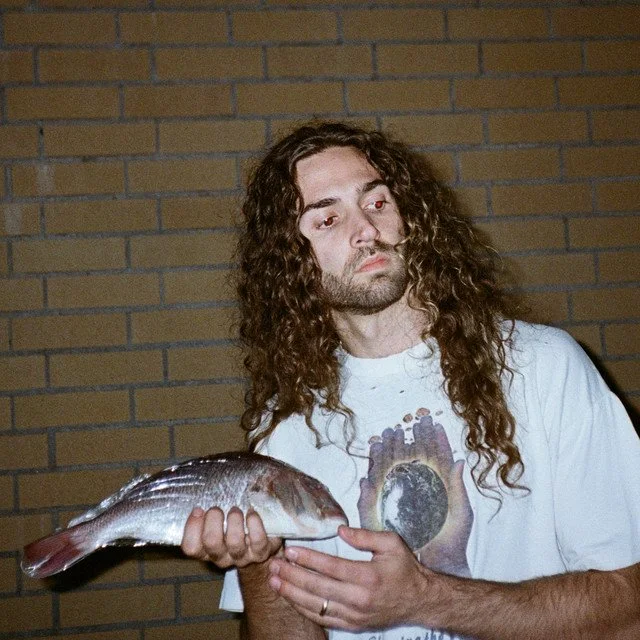
Photo Credited to Spotify
Opening up May 2026, indie artist James, aka Valley Boy, released his first full-length album, ‘children of divorce.’ Through the music, James reflects on his upbringing in the San Fernando Valley where he and other people he knew reacted in different ways to their broken homes.
For a concept album, it’s full of true stories, real names, beautiful vocal moments and universal truths. I had the privilege to sit down with James to chat about his experience sharing these tracks with the people who inspired them, his musical process for ‘children of divorce,’ and a potential deluxe version.
“this big kind of monolithic idea that was looming”: James’ wrestle with starting the album
James writes for and with other artists, so Valley Boy is his own personal musical persona. He always knew he wanted to create this kind of album, including the title, and used early Valley Boy music as the warmup.
“When I'm writing with other artists a lot of the time, topically, the subject matter is usually love or it's interpersonal romantic relationships or lack thereof,” James said. “I think that's a really fruitful and yet common theme in pop music at large. After doing that for some years, before I had started Valley Boy, I kind of got this feeling in me that I really want to be able to make music as an artist and make songs that I wouldn't be able to sing with other artists…I wanted to be able to talk about things that really shaped me.
“I'd always wanted to make it as the first debut record, and honestly, it just took a while to get there... This record began when I finally decided, ‘Okay, I think I know the kind of artist I want to be now, and I'm ready for it, and I think I have my musical references a little more nailed down.’ That's how I knew I could begin starting ‘children of divorce.’ It took a couple years of writing and recording and refining to do it.”
Like many great artists, sometimes the concept comes first, and the writing comes later. ‘children of divorce’ seemed to stay on his horizon as “this big kind of monolithic idea that was looming.” He kept telling himself he’d eventually delve into creating the LP but admits for a while he had no idea how.
“It was because I was putting off the writing that I hadn't yet discovered what it was, and then once I began writing for it, a lot of songs poured out, so many fricking songs,” he said. “Actually, the first one that came was ‘James, age 12,’ which is cool, and that's the opening track. That's one of the few on the record that I didn't write by myself. I wrote it with the guys who co-produced and co-mixed the whole record with me, Mike and Kevin.”
James remembers working on his “I Met God” EP with Mike and sharing the ages they were when their parents split up.
“We realized that it happened to us at the same age. We were both 12 and it was so weird. I don't know why it's common. I mean, look, there's only so many numbers to choose from. It could have happened at any of them, but for some reason, that number just resonated in the room, and it was so impactful for me that Kevin had a guitar lying around. We were at Kevin's house and Mike picked it up and started playing and it was in an open tuning. The first thing Mike played just sounded good, and it was a guitar part that had that melody. That's actually the only song I did it for on the whole record. All the lyrics just totally poured out. I didn't even play a single instrument on that recording. That's the only one. I touched zero instruments.”
The 34-year-old went back in time 22 years on ‘James, age 12,’ to the day his life changed forever, the day he was given new lenses to see the world through, and his journey from that point on.
The song was born as the perfect album opener. It plants the listeners into the record’s world and the day that spurred all the other events on the album. The track also features some of James’s favorite lyrics on the project:
“I love the opening line, but the line that always gets me emotionally was ‘yes, my body's older, but a part of me’s still stuck. I guess that 12 is old enough’ because it's kind of my attempt to explain how how trauma cements a part of you in that place and your work is to go find that person and find that version of yourself and try to give them comfort and maybe try to bring them forward with you, and unstuck them, you know?”
After ‘James, age 12’ was recorded and completed, another six months passed before James continued making the record.
A poem as the catalyst
Though the pull to continue with his concept persisted, in his torn state, James read a lot of Charles Bukowski poetry. One day as he was reading and also thinking of his elusive ‘children of divorce’ idea, some of his own words surfaced, and came out as an original poem.
“I began to write lyrics to what turned into the song, ‘Thank God For Alicia!’ which is track four on the record, and they just kind of all happened. I was nowhere near a guitar, even. I was just with a notebook. After the lyrics alone happened, I was like, ‘okay, I'm really gonna do it. I'm gonna make this record. I'm not gonna do just a smooth, cool R&B love song record. I'm gonna do a really big, scary, I-don't-know-how-to-market-this record’.”
The initial poem surprised James.
“By writing down a poem for her, I learned something about her while doing it that I had never thought before. I saw that I had never really seen her — the first girl I ever made out with at age 12 — and I really never knew her, basically 20 years later, just coming to that realization. As much as she was important to me and as much as she meant to me, and just the act of going through that, I actually had contact with her humanity in a more real way, and even in touch with my own humanity more deeply, is what kind of woke me up to, ‘no, I have to do it and I have to go through basically everybody that I can think of and I owe it to them and I owe it to what they lived through, and I owe it to all of us who have been through it as best as I can.’ It was her poem that really cracked it.”
While he had the lyrics solidified, the song was “hard to nail vocally.”
“When I played it live, I just brought so much more energy to it, and then when I went back to the recording that I had already done, I was like, ‘oh no, it can be more than this. It should be more lively. She has more life in her than this. I need to do more,’ so that song got a version two because I wanted to do more vocally. It wasn't challenging necessarily, as much as I wanted to be even more expressive. ‘This song should be the most expressive. This song has to be every expression,’ so that song was difficult just because it was so hard to sing enough, and actually, live, now I even do more. That song I just keep pouring it on.”
Once he decided he’d move forward with ‘children of divorce,’ the storytelling poured out, and as he put it, “wrote so many freaking songs.”
Balancing honesty and care in the storytelling: singing about his parents
Since much of the album is James telling other people’s stories, he wanted to approach his process with care, but also honest storytelling. He read acclaimed journalist and writer Joan Didion’s work to find the best strategy, but was met with confliction rather than certainty.
James even took the leap to write about his mother, Mona on ‘Mona (you stayed).’ He especially loves the lyrics, ‘Abandonment. We carry it ‘till we all get a little mean. Betrayal is a rust. It'll eat your trust. He can scrub, but he can't get clean.’
“I like that one because it feels like it's a little tongue in cheek just saying, we all get a little mean, but really giving some space to just say, ‘guys, abandonment issues are real.’ They take up a lot of space in the life of someone who has them. I've seen my mom be less kind of a person. She is kind now, but you know, it's a road. I've struggled with kindness and I see other people and I see bitterness and I see anger in other people, and when I see it, I just immediately see abandonment issues. It dissolves whatever anger I feel for other people. People who have been uncared for, that's where that meanness comes from, so that line is important to me.”
The song doesn’t “lionize” her, or say she was perfect, but Mona loves her track.
“She's just all about that song.”
‘Mona (you stayed) was a “total accident.” Before its creation, James was recording with his friend Kevin because Mike couldn’t make it that day. They had already been working on the songs, ‘Unicorn’ and ‘have you seen Rachel?’ and the session’s intention was just to “tighten some stuff up.”
“Kevin has this cool little bass guitar, but it's a little bit smaller, so they call those short scale and it's acoustic…I picked it up [with] the bassline for ‘Mona (you stayed).’
“It was boom. I just was addicted to it. Kevin was like, ‘we should write that,’ and I was like, ‘no, no, no, we should just be working on the other songs,’ but I couldn't stop playing it. Then the whole song kind of poured out. I barely remember it. The only thing that I remember in the writing process was I took it home after it was basically recorded and written from that first day.”
James laughed about being so particular about the musical progression of the song, like only allowing Kevin to play the floor tom for the drums.
After that initial session, the only aspect of the song that changed was one lyric in the second verse.
“My wife, Delacey, who's an amazing artist and songwriter was like, ‘one of the lines was not nice’ to my mom or wasn't nice enough. She was like, ‘you should make that sound better for her,’ and I was like, ‘okay, fair enough, actually.’ It was again, one of those moments where if I'm going to do service to my subject, I need to not try to take any cheap shots at them. I need to respect their lived experience too.”
Even though James presents his father as an elusive character, he’s one of the only people whose literal voice is shared. At the end of ‘James, age 12,’ there’s a small bit of dialogue audio. James lit up when I asked him about it.
“So sick, you're the first person to ask about that. That's the only moment on the whole record of audio that's not music audio or instrument audio. What you're hearing is a small conversation between my dad and my wife after my dad's wedding. He is saying, ‘Thank you guys for coming. That was so magical and wonderful,’ and then my wife, not me, says back to him, ‘Yeah, of course Alan, we love you. We're happy for you.’ I've put it there because it just felt right. It is this beautiful foreshadowing to “embarrassingly into the void,” which we get at the end of the record. I mean, it's barely a foreshadowing because it's such a tiny little detail, but it just felt right having a little piece of him in the record, and for a time there was a way that song transitioned into another song, and maybe we'll see that deleted scene in the deluxe version.”
“Surprising little accidents”: the unexpected tracks
Many songs were “surprising little accidents” like ‘one year of uninterrupted hives,’ which also started out as a narrative poem. It outlines the story of when James first broke out into full body hives after leaving a girl’s house he was seeing at the time.
“When it happened to me, I wasn't a child anymore. I was in my twenties and it was massing the weight of all this trauma, and instability was kind of building and building and I wasn't really addressing it and I wasn't knowing, and I was just trying to go about life and figure out my path in my twenties. We all are. There's that mind-body connection. Suddenly, all of that anxiety and all of that trauma that I hadn't dealt with was finally having a physical manifestation.
“I had this poem sitting on my phone and I was actually rehearsing for a show with Mike and Kevin and my other friend Alex, and we were rehearsing other stuff, earlier Valley Boy stuff, because the ‘children of divorce’ hadn't come out yet, but we were rehearsing and they're all just such great musicians and we all make music really well together. Well, actually, this story applies to two songs, but for ‘one year of uninterrupted hives,’ Kevin, who's generally drums in the band, sat down at the piano and he started playing. It was just kind of stream of consciousness. I didn't have an instrument on me, which was really cool and unique because for most of the record, it's all songs that I've spent hours figuring out by myself. But this one, again, I played nothing. Kevin was playing piano, Mike was playing a bass, and I believe Alex was playing guitar and we were letting it happen and I started singing the poem with really no plan, no arc, no idea, whatsoever. Kevin continued to play and everybody just kind of played along.”
“In the same iteration, when we were doing rehearsals, and I don't remember if it was the same day, if it was the same rehearsal day or another one, but the song, ‘embarrassingly into the void,’ was written. It was another poem that I had hanging out on my phone, and it was with those friends who were just such good musicians. Again, I could just be a singer in that moment because they were already making music that was just so good and I fully just sang out an entire song that we truly just did our best to recreate from the voice memo of it. We tried to copy everything. What's funny is part of it we were making it up as we were going. Certain things we wouldn't have done if we had been actually rehearsing it or practicing it.
“The song starts with the drums filling in and then they cut out for a second and then they come back in, and that's just because that's what Kevin did on the voice memo. The bass will drop out for a while and then come back in, and that's just literally because Mike was like, ‘wait, what do I play here?’ while we were making it up and then we were just like, ‘no, no, no, that's perfect. That's perfect.’ Those were really fantastic experimental accidents that happened on the record.”
James and his collaborators didn’t try to make the song sound “super pretty.” In general, James found ambient noise to be important to the album. Mike created a harmonic-like scratching that is heard on the album.
“He was dragging his finger across his bass string, dragging his fingernail across it very slowly. We had him do that possibly on every song of the record, so there's these weird moments of tension where you hear dissonance and something that is not harmonic happening and kind of building and letting you know that things aren't as they should be. Maybe the only song that I know doesn't have it is “tell the Kids the truth” because you made it to the end. It's a really long bass. We have two minute takes of him just dragging his finger across the bass string…We're like, ‘well the song's not done until you add your scratches onto it.’
The difficulty of telling his story and Ian Meltzer’s
Track to track, whenever James sings about someone else’s lived experiences, the passion is evident in his voice. Then when he speaks about his own experiences, he’s a little more reserved until ‘easy will the pieces fit,’ where he finally advocates for himself and the love he wants.
“That is the breaking point, right? Once you have a whole year of hives on your body, you change your relationship with advocating for yourself. You're like, ‘actually, if I'm gonna be in painful, hot, itchy hives for that long, maybe I want to be actively changing and seeking this. I need to acknowledge I'm angry. I have anger. I need to acknowledge that. I need to acknowledge I'm frustrated... If you don't even recognize that you need help, how can you start to help yourself?”
He struggled with writing some of the songs, including the second track, ‘Ian the actor.’ Valley Boy wasn’t always a solo project. Valley Boy began as a duo with James’ childhood best friend and musician Ian Meltzer, who inspired the song.
“He's since gone on to be a fantastic touring and session drummer for a lot of other artists,” James said. “We've parted ways amicably, but he was also a child of divorce, and so it was something that we had bonded over as kids. I have known him since I was 12 too.”
Ian’s song had three different versions at one point.
It ended up being one of the final songs on the album. ‘children of divorce’ kept feeling incomplete, and James didn’t like not having a song for Ian on it.
“It was just really eating me up. I decided I would have a third go at it and I felt like I nailed it a little bit better, and to be fair, I don't know if he really still feels like that's his story, but he at least liked it and he approved the third version.”
Sharing the songs with the muses & the tragedy, the healing
James had shared his songs with many of the people who inspired them, including Alicia.
The song that was difficult to share was “Evan in my Japanese beer” about his friend who died in a drunk driving accident at a young age. James’ serious tone pulls you into the heartfelt story, and then how he belts his lament for his friend will raise your skin and make your eyes well.
“It's so common when you grow up with instability, you grow up with substances more easily accessed because you don't have two parents supervising. You don't have two people keeping track of you all the time. It's a numbers game. There's also so many other factors like emotional instability, all that stuff, but anyways, showing his family was really hard. That song I wrote and recorded, first, under the condition that if I didn't get approval from his family, I wouldn't release that song, and for a long time his family didn't want to hear it. The idea of me writing that song was upsetting to them. Then some four or five months went by and they finally asked to listen to it and cried a lot, but also felt like it was like the best song on the album and gave me their blessing to do it.”
Sometimes a mere glance at the past can be painful, and yet James dove back into his and others’. He compares the experience to EMDR therapy but without mentally changing the former events. He allowed himself to relive everything, but with an adult lens. The catharsis of making the album came from telling the stories authentically, which validated James navigating his broken home.
“Making this album was what I wish I could have heard when I was younger, this book of stories. Maybe there's lessons and maybe there's just reflections of being able to see myself in it and being able to see yourself as this child of a broken home in it because it's hard to do that when you're going through it.
“Here is an actual physical embodiment of proof: ‘Hey, it happened. It's not just in your head,’ which is so hard for those of us who have had childhood trauma of whatever it may be. It's really hard to create a monument to it. Most of us would think instinctually, we wouldn't want to make a monument to that, but actually it might be important to create some sort of physical place where you can say, ‘Hey, here's the flag that proves that this happened to me and I can walk away from this place now, but I just need to know that this flag exists and that there is this place where that proves that. What I went through is real and why I feel the way I feel is real, why I struggle with the things I struggle with, it has a reason. It's not just I'm broken and I'm stupid or I suck. These things happened.’”
The experiences in James’s musical stories weren’t altered, but with time, comes new perspectives.
“The creative process proved to be healing for James, and yet, the thought of finally releasing the album left him with guilt. Offering his “heavy” LP to the world made him feel like it would inflict sadness onto people. He asked himself, “is there any use for that?” Luckily for James and his listeners, his wife, Delacey, stepped in.
“She really reminded me that I go to heavy songs and I go to these hard places as a listener. I go to them because even though it's easy to forget, they prove that heavy things do happen to people. Sure, we don't have to spend every second in it, but also we can't ignore it and pretend like it's not a part of us. If we do, it turns into something awful, it turns into a nightmare, but if you actually let it in and experience it and give it space, you can feel it. That's important to do as a human.”
Finalizing the tracklist & a potential deluxe version
Still wrestling with uncertainty, James sent an early version of the album to his “diehard” and “trusted” fans.
“A few songs changed in the last year. I added some new ones. I recorded even more new ones and then whittled away and whittled away and whittled away. The thing that kind of guided it to be story-song focused and more character driven and not just a broad album was that the most important thing I could do was tell the specific stories of specific people. Validate their experiences.”
The track, “Happy All The Time” is another song that didn’t end up making the official tracklist despite its children of divorce concept.
James wants the record to have “had its time” before releasing a deluxe version of ‘children of divorce’ hopefully sometime this fall.
I asked him what it was about the order of this 13-song tracklist that finally felt perfect.
“That's a great question and thank you for asking because it does validate how much sleep I lost over that. There were so many ways to tell the story. I really did struggle with, ‘is this non-linear? Should I arrange it in order of songs that just feel good next to each other? Arrange it by vibe like many great albums are arranged?’ I struggled with it too because I felt the songs shift in genre and energy a lot because they deal with different characters and they deal with different circumstances. You don't get prepared for it. You're just suddenly in a new world. Diana is so different from Alicia because they were such different people. Ian is so different from Diana. James is so different from Ian. ‘Gollum’ is so different from Alicia.”
James goes on to say that Gollum was hard to record and is still hard to perform for a handful of reasons.
“Throughout the record I was always trying to reference musically, at least in part and sometimes in combination, other musicians that are children of divorce that are heroes of mine. ‘Thank God For Alicia!’ is really big Jeff Buckley energy. Some of the songs give more Amy (Winehouse) energy or Neil Young energy or Kurt Cobain, but that song I was like, ‘I need to tap into whatever my version of Frank Ocean is.’ Especially that second verse when it starts to really like go and go like, ‘am I rapping?’ Kind of.
That song was hard vocally because it was really hard to nail the perspective. I know that sounds weird, but I was like, ‘what character am I to be Gollum?’ because that song is kind of ironic, you know? It's me saying, ‘you'd never do that, would you? You'd never do that to me. You'd never do that to us,’ but I'm kind of singing from the perspective of someone who's deeply suspicious and has every reason to be. It's kind of someone who already knows the answer. ‘Yes, someone would do that to you. Someone would betray you, someone would ruin everything. You've already seen it happen,’ so as much as that song's technically a little tricky because the notes I'm singing, the color of those notes on the chords, it’s particularly tricky sometimes to hit those specific notes, musically.
“There are notes that are sometimes a little bit easier for your ear to hear. The main notes in what's called a triad, the root of the chord, the third of the chord, the fifth of the chord. Those are sometimes the easier notes to hear. In that song, perspective wise, it's a weird balance of irony. You're suspicious, there's pain there, but the pain doesn't even really come out until later in the song. In the last chorus, when it starts really revealing that it's desperate and actually, ‘I'm somebody who's been hurt and I'm showing it.’ It's also singing a melody on the notes that are a little bit harder to hear sometimes for the ear, which are the major seven and the nine or the second. These are notes that have a lot of tension. The melody is over these pretty chords, but it's singing super tension notes the whole fucking time. It's tricky to hear it and sometimes sing it in tune. I feel like that song I did the most takes on out of all the songs, vocally.”
James wanted the album to start when everyone is young and end when everyone mentioned is older.
“We have experiences that feel chaotic. It's hard to sometimes make sense of them. It's not that life happens to us and we are just like, ‘oh, that makes sense that this happens now and now this happens and we're prepared for every step. Chapter two. Perfect. Okay. Chapter three. Well, as you can expect after chapter two, chapter three will go exactly like this.’ Instead, we're in this crazy pinball machine and we have no idea where the flipper's gonna send us next. By the end, we've seen love in ways that we didn't expect. We've seen a lack of love. We've seen trust, we've seen mistrust, we've seen instability. We've tried to find our feet. We've seen anger, and that's why the record ends with ‘tell the Kids the truth.’
“As much as it maybe doesn't sound like it's all arranged that way, it is this kind of pseudo-chronological order of how my life happened, and by the time my dad finally remarried, where I was at with my life and in my relationship with him, it also just worked out that it kind of gives the album this tragic-comedy effect because you know how a comedy is supposed to end with a wedding? My situation in which you hear song one, it's about how my dad abandons my mom and leaves the family. Even though maybe he's not the character you want to see married at the end, he's the character who gets married at the end, which is true to my life. I also just love it if it were a screenplay.”
On ‘tell the Kids the truth,’ James jokes about how singing the word, ‘you’ twice in back-to-back lines is a problem for him as a songwriter, but that he really likes the lyrics, ‘your parents help create ya, but they're no more God than you. Just left on this earth with no explanations.’”
“I'm this-year-young discovering that truth. I wish I was 12 when I knew that.”
If you’d like to hear James rap to ‘Gollum’ or belt ‘Thank God for Alicia!’ Valley Boy has upcoming shows in Los Angeles at the end of August