
Building a Community Brick by Brick: An Interview with Ryan Jones of Every Us
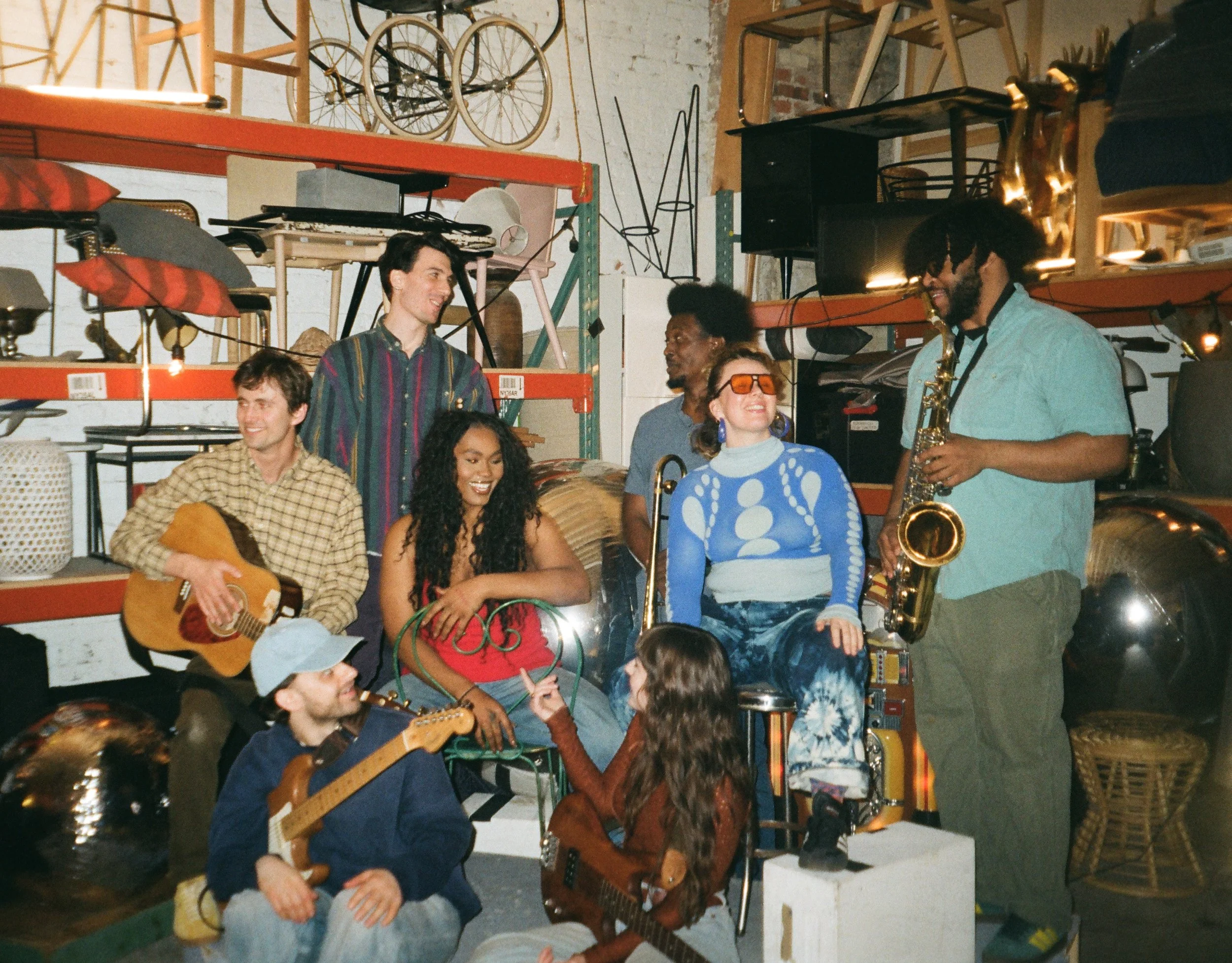
Community holds a different definition for every person. Who we build community with is a result of our own hobbies, needs, traditions, and belief systems. While individualism and the turn against unity rise in the US, we, the people, must constantly look for ways to bring people together again. Brooklyn music project, Every Us, is doing exactly that. Taking this concept of communal joy and unity, the group has a mission of bringing various music communities together, unifying for the greater good. Combining a variety of genres and musical influences, the group’s main focus is bringing the feeling of togetherness and community directly to the listener's ears. Band leader Ryan Jones utilizes his background in studying music abroad with what he grew up seeing and hearing in the US to bring this indie-soul project to life. The group focuses on bringing a diverse and always evolving sound to listeners, without ever feeling too on the nose. Between folk, electronic, R&B, pop, and jazz, Every Us has brought together over 200 musicians, and does not plan on stopping any time soon. Their debut EP, Some Kind of We, was released on March 20th. Consisting of 5 tracks, the EP is an exploration into the group’s collaborative nature. Each song is feel-good, featuring group vocals and a bright and sunny production style to harness the sound and feeling of laughing with a group of friends. To further discuss the creation of this project and the act of building community, I spoke with band leader Ryan Jones to dig deeper into the mind behind Every Us.
[UPTIGHT] The music of Every Us pulls from many different avenues and genres of music. What does your upbringing in music look like?
A: It's so interesting, the more I do music, the more I realize that everyone's taste is such a byproduct of whatever their parents listened to. Those are the patterns you get comfortable with. Then there's this funny thing where 30 years after everyone's making music a certain way, you get that wave of the 80s or 90s influences coming back into music. But with what my parents were into, I’m from Seattle, so it’s cliche, but my first concert was Dave Matthews Band.
We had a radio station that essentially pretended to be a pop music station, but really it was trying to keep grunge alive. They’d sneak in the Foo Fighters, so I had some of that as well. Then there was 2000s big production stuff like Coldplay and Death Cab for Cutie, and then later on in Seattle, there was a lot of ODESZA. So, a lot of this new wave of natureful and atmospheric EDM, which was great. I studied in London during college. There, I listened to a lot of Tom Misch and Jordan Rekai, which was a lot of slightly jazz/soul-infused pop.
[UPTIGHT] Did you grow up playing instruments with your family, or was it something you picked up in school or on your own?
A: I did piano lessons and guitar lessons for a while when I was a kid, but I have ADD and would get bored playing other people's music. I ended up playing my own stuff because it's the only thing that would keep my attention. I remember pretty vividly going to a Ben Howard concert, and when I came back, I flipped the guitar on my lap and just tried slamming it to make noise. It was like, “Oh!” which I feel also helped expedite my songwriting. Outside of piano and guitar, I joined the band in my senior year to play the tuba. I wanted to play the trumpet, but my band teacher said I had the mouth for a tuba, so I ended up with the tuba section.
[UPTIGHT] What do you find the biggest differences culturally are between music scenes in the US versus the countries you’ve lived abroad and experienced music in?
A: It's very country-specific. In London, one of the things I loved, it felt like everyone was secretly trying to be Amy Winehouse instead of some big pop star, you know? That was the big influence. Everyone was a little bit more, “I don't give a fuck,” instead of trying to be this sexy pop star, which I thought was a fun influence. But in other places, like living in Shanghai and Mumbai and places like that, it's easy to overglorify, but it is largely the same. To some extent, less people are thirsting for stardom.
There's a lot more music that is just happening in this beautiful way, and mainly it’s music that is traditional to those places. There’s less weight on it sometimes. There are also so many sounds that you forget exist. At first, your brain is like, “Ooh. This is kind of dissonant. I don't recognize these patterns or timbre.” But after a while, you're around it, and you start to see where it emotionally fits, and you're like, “Oh, this is really nice.” There is also this crazy cultural weight to some of the music that I feel like maybe country music has in the US to some extent, but not on a national scale. I think that there's more music for specific situations that hold a lot more weight.
[UPTIGHT] Is there anything that you've brought back from those experiences that you applied to your approach when creating music for Every Us?
A: Something that was really fun when I was trying to come back and make more music was detaching from certain instrument sounds. I think when you're producing, you learn that piano and guitar are the bones for everything. Trying to take other instruments and figure out how to sneak them in without it feeling like that genre and making it its own thing with its own space is really fun. Your brain can break those patterns. Definitely, the group vocals are very core to Every Us, and I think that comes from a lot of faith-based music. I always thought that energy was so cool and not used that much outside of that genre.
Right now, we're in this period of hyper-individualistic artists expressing themselves, but I think with the combination of vocals, you get so many interesting textures that you haven't heard. In a lot of other places, it's just way more culturally acceptable to sing. Iran's just got men in groups hanging out and singing together in public places. That shit doesn't happen here, you know? Stuff like that with specifically different group vocals doesn’t really happen in pop, so it is fun to constantly try and play with that. I also like sampling stuff. Certain textures like that can add a lot of life to music, so sneaking those in where I can and not having the listener quite know can add a lot of color to things.
[UPTIGHT] Before the creation of this project, how were some ways that you found or created community through music?
A: It's pretty interesting because I didn't start [in a music school]. I think when people go to music school and have that specific upbringing, they have that community. When people start a rock band in the garage kind of thing, they have that community. I think there's this huge demographic and generation of people who just learned how to produce themselves on their computers, and as a result, you have to relearn collaboration and find musical community in other places. I think that's kind of been some of my process, especially since the move to New York. I had more of that community in London. There is also literal stuff where we just throw lots of backyard shows for different New York scenes, which has been great.
I think it's just trying to get out of your own sound, too. Sometimes artists learn to make music in their own way, and it's been really fun to try to express someone else. I think that experience is in scoring, too, but that also comes as you work with other people. I like to ask, “What other sounds can we make besides the one that I'm trying?” and I think that's pretty liberating.
[UPTIGHT] The aftermath of the COVID-19 pandemic has played a big role in the loss of community across the country. Do you find that was a driving factor in creating this project?
A: Definitely. Before this, I had a project that was just my own name, and I feel like Every Us was a really fun way to kind of liberate myself from that. It's really easy to sound all corny when it's like, “Community! Connection!” so I think it's less of a moral statement with Every Us and more about exploring that idea. After COVID, I was really interested in looking to see where all the places are that community shows up that I didn't realize. Things like a barber shop, your relationship with a friend, and all of these little sub-communities in your life that get to see a certain side of you. I think all of those, whether it's explicitly music or not, have a certain feeling and tone to them, so I thought it was fun to try to explore what that could sound like.
[UPTIGHT] What has the process been like creating this EP with such a variety of talented and unique musicians?
A: It's been fun. Some of the songs we've had forever and are just now finishing them up, bringing in voices, and kind of tailoring them to that. Other songs, though, have been more crafted around certain people. Most of these started around a melody or a sample, and then we'll turn that melody and play this long game of figuring out what that group's vocal sound is for us. We tried something much closer, mimicking one specific sound and less of a loose group energy. We're constantly trying to play with this tension of what's the right amount of controlled chaos before it gets confusing and messy. We want it to be interesting and new, which is a core challenge for us. We'll do a lot of the production first because that's where I naturally am drawn to, and then we'll bring in specific musicians/vocalists to express themselves on a part or verse. We do one big session with about four or five of us singing, and we sing across all those tracks. Then we try to do specific writing sessions for each track, but it's another one of those tensions. We're still trying to figure out how to talk about these concepts and not have it come off as corny. We want it to feel authentic. What we're trying to do is capture that specific warmth that you get when you're surrounded by your people. We want to keep that higher energy and weightlessness to it, so that is what everything was kind of built around.
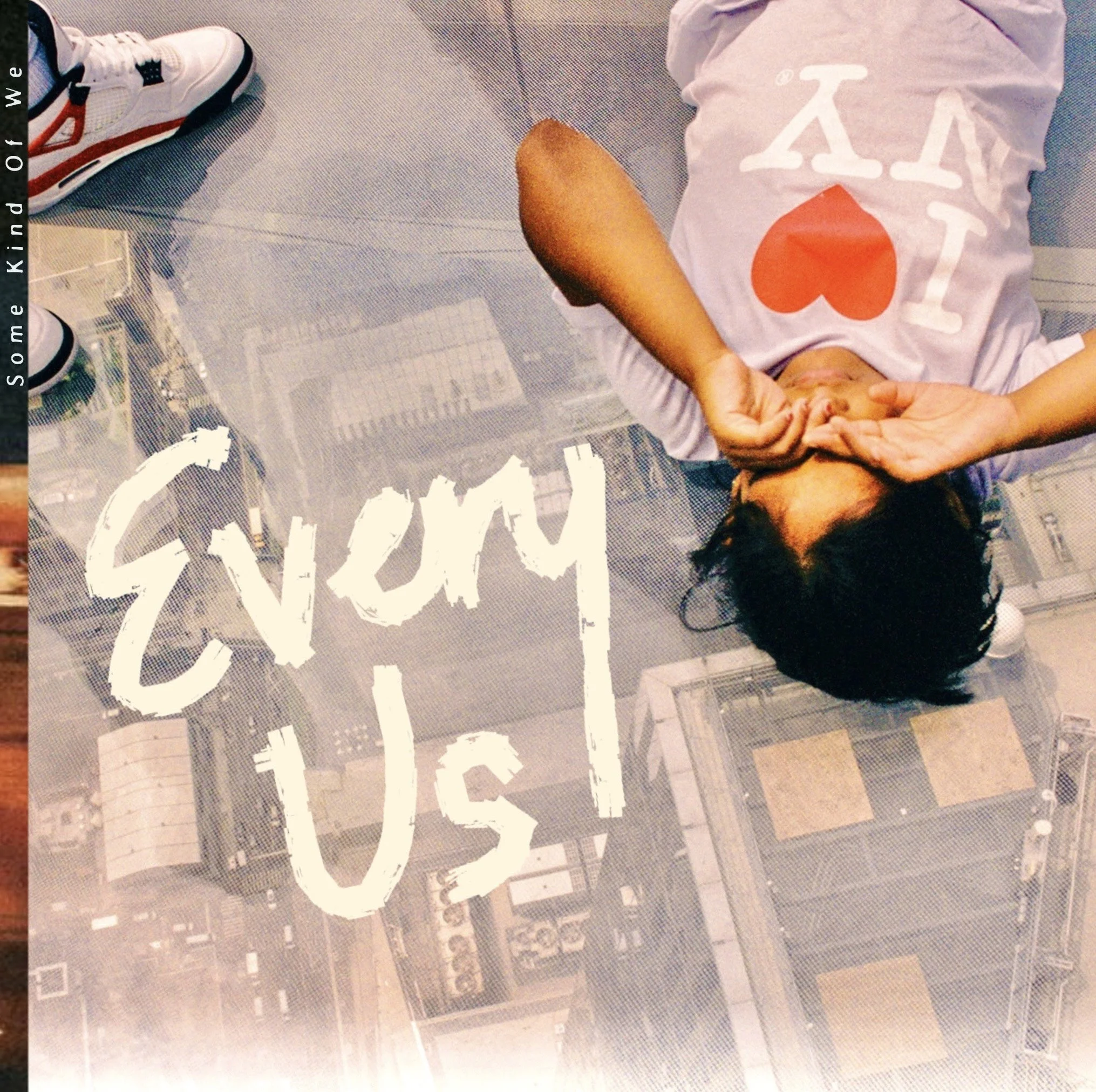
[UPTIGHT] The title of your debut EP is Some Kind of We, adding further to your message of finding your people. How did you come up with the title, and what does it mean to you?
A: We are trying to balance articulating the idea without being too on the nose about it. As you can tell, I think about music very abstractly, so I can never tell if something is too abstract or too obvious. But we wanted this to follow the idea of people making their self-titled album, where it's like, “This is what the concept is.” Even if the idea isn’t necessarily musical, we hope it shines through in some of the things we do, like street photography. We commissioned six street photographers from Kashmir, Lagos, Taiwan, Taipei, Los Angeles, and New York to capture the concept visually. It’s all about trying to articulate that idea through music and visuals without directly saying it, so I think Some Kind of We is probably the closest we get to saying it, along with our name.
[UPTIGHT] You said previously it's not directly a moral thing, but we are living through a time of such great division between people across the US and globally as well. With a strong theme of communal joy and togetherness, what do you think listeners can take from this release and apply to their own lives?
A: Without morally prophesizing, that is kind of the fun part of this. We could have an endless conversation about the technological and political elements that are dividing us, but I think these things generally turn into binaries and teams, so it's fun exploring the different ways we join each other. There are a lot of different places that we come together and feel like a part of something together that aren’t always traditional. We get to highlight those places to show how close we actually are, and how good it feels to share the same feeling with someone. I think that's way more powerful than any intellectual articulation through discourse.
[UPTIGHT] What are some long-term goals and ideas that you're aiming to complete with this project?
A: We’ve been trying to play a lot more shows and have been trying to refine the live set with this amazing band, which has been really fun. I think now that you can look at the accumulation of whatever content and music videos we've put out, you'll be able to get the idea more. Now it's really just about digging in to figure out, “Okay, how can we make this music together? How do we keep tweaking the last 20% to find something really unique to fill a space that isn't there in the music scene right now?” That’s the most exciting, and also continuing to build a team and get the next project out.
[UPTIGHT] You've already connected over 200 artists with this project. Are there any other musicians, genres, and/or artists outside of music that you'd like to work with on any future releases with Every Us?
A: Yeah, my god, endlessly. Which discipline do we want to pick from? There's something really great about working with musicians who know how to grind and are great on their instrument because they love it so much. That's the only way you keep doing it. Once you start playing the ego and promotion game, that shit burns you out so quickly. I think it's all about finding more people around here who are masters of their craft and have figured out what they really like to do musically, what they can add to a specific sound, and then adding that in. I’d like to be able to create new relationships and then create and pump out more music. I'm always curious about how we can add these interesting world sounds in a way that feels authentic, just to create new textures. There are a lot of people in New York having a great moment in music right now, so it's just about continuing to find everyone here and giving us a reason to make music together.
[UPTIGHT] Live performance is another avenue of bringing people together musically. What does that look like for you guys, being such a huge collective working with so many people?
A: We've got an eight-person band right now, and I’m hoping to bring on more trumpet players. We've got a full horn section, it's fun. A lot of the vocalists have different moments for themselves with lots of different combinations of us singing and them singing, lots of musicianship. We'll still keep this elevated kind of energy throughout the live set, but I think we're excited to really refine and pin it down.
It's moved around in different places over the past three years, and we've done less playing live, so I think this is one where we're going to do a good string of shows and really nail it. You forget sometimes how much being in person and doing the thing in front of people makes it something real. It gives the audience something to see and feel in such a different way. I didn't always appreciate that coming more from the production side, and it's such an authentic, raw thing where all the mistakes and realness come out. I think I saw James Blake talking about that. He said AI will hurt a lot of the production and mastering side of stuff, but it might only re-emphasize the power of live music and all of the wall-ness and grittiness that comes with it. Leaning into some of that and being able to feel it, you get those moments where you’re not thinking about it anymore. It's purely my body, and enjoying this thing, which is what I think we're definitely all chasing with the band.