
Searows Concert Review

Photographed by LUCY NGUYEN
Born in Portland, Oregon, singer-songwriter Searows embarked on his second North American tour to promote his sophomore album, Death in the Business of Whaling. On May 15, 2026, I had the privilege of photographing and reviewing his sold-out show at Metro Chicago.
Prior to his set, Jordan Patterson opened the night with an incredible performance, setting the stage perfectly for Searows.
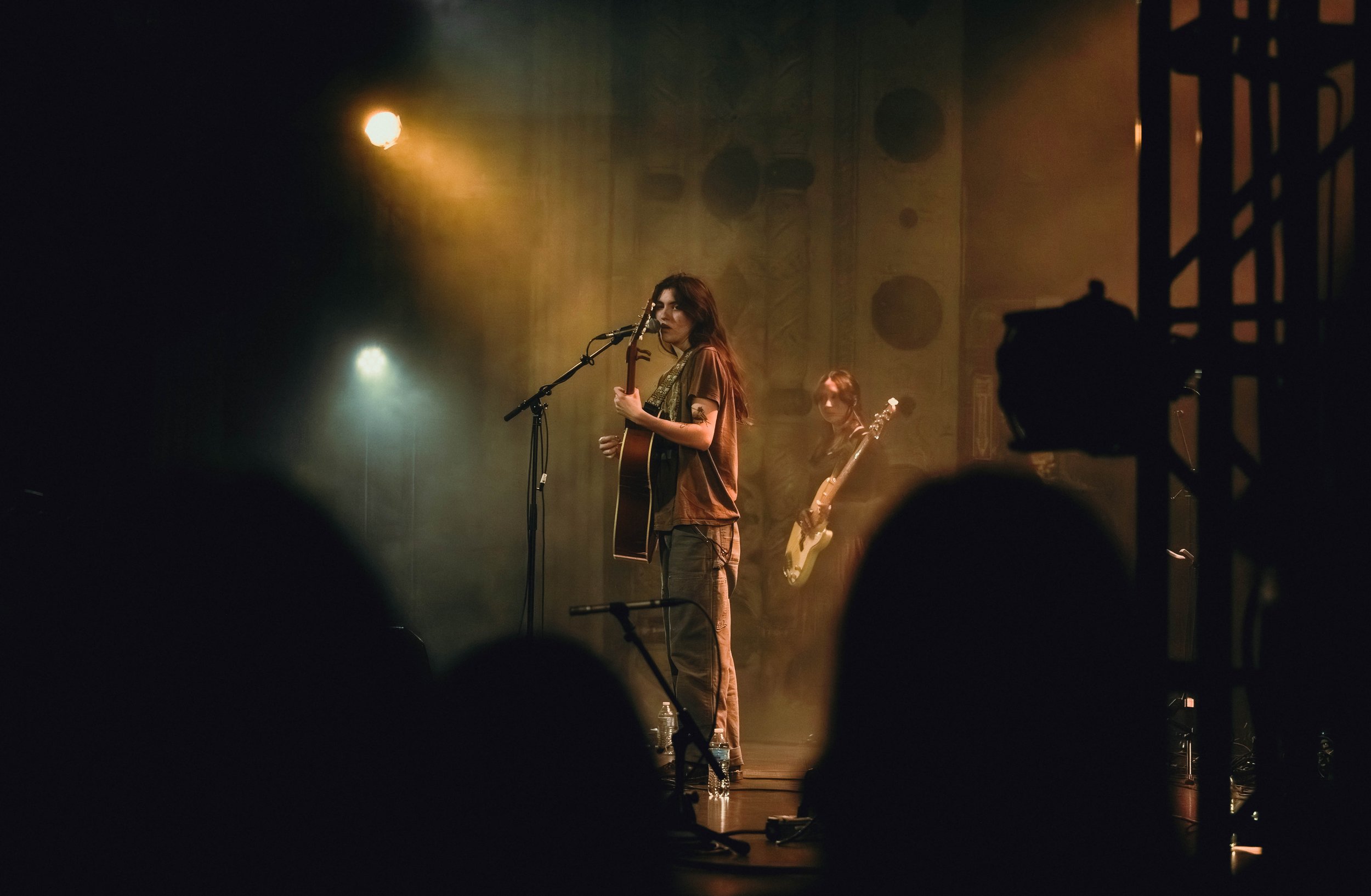
Promptly at 10 PM, the bandmates approached the stage: Marlowe Ostara on bass, Remi Guiella on drums, and Shannon Callihan on guitar. Marlowe especially stood out to me as I watched them use a bow to play the bass. Alec entered moments later to roaring cheers from the crowd as the introduction faded into “Belly of the Whale,” a piece about feeling trapped in a hopeless situation and succumbing to personal failures as they slowly consume you. As I began photographing, I watched the audience sing along in awe while the slow, melodic chords echoed throughout the room. The banjo on this track is by far one of my favorite uses of the instrument on the album.
Next came “Kill What You Eat,” my personal favorite—a song about losing yourself through isolation and interpersonal conflict. With a strong percussion-driven introduction, “Photograph of a Cyclone” followed. These opening three songs mirrored the track order of Death in the Business of Whaling while also establishing the emotional tone for the rest of the night. The dreamlike guitar strums, combined with the shift from dim white lighting to orange and red tones, created a striking visual contrast.

Photographed by LUCY NGUYEN
As I left the pit, I noticed several fans visibly emotional and teary-eyed while singing along to “martingale,” the fourth song of the set. The track reflects cycles of pain and inherited trauma, and although metaphorical, the heaviness of the lyrics—paired with Searows’ harmonies and humming—brought a sense of comfort not only to me but to the audience as well.
“Dearly Missed” followed, with Alec switching from acoustic to electric guitar to create a heavier sound that emphasized the song’s themes of destruction, trauma, and raw human emotion. The lighting once again transitioned into deep reds and oranges to match the intensity of the track. During the verses, Alec’s vocals and the band maintained a softer dynamic, but as the chorus arrived, they exploded into a fortissimo that heightened the emotional contrast.
“End of the World” came next, a song Alec admitted he does not enjoy performing despite its popularity among fans. I especially appreciated how he sang the piece in a lower octave, making it feel more intimate and vulnerable, particularly under the blue-tinted lighting.
After “End of the World,” the rest of the band left the stage while Alec performed “Coming Clean” and “Dirt” solo. “Coming Clean” is a slow-paced track centered on honesty and forgiveness, while “Dirt,” driven by delicate fingerpicking, explores the inevitability of death. These songs became the most memorable moments of the night because of their minimalist presentation: dim white lighting, Alec’s vocals, and his guitar were enough to completely fill the room. Unlike earlier songs, the audience remained almost silent, allowing his voice to fully resonate throughout the venue.
The contrast between these two tracks—one confronting honesty and the other mortality—centered on the idea of closure, whether in relationships or in facing the unknown. Alec’s lyricism feels deeply poetic and relatable, shaped by personal experiences that capture the vulnerability of simply being human.
The band returned for “In Violet,” where each member beautifully supported Alec’s vocals. The banjo, in particular, tied the entire arrangement together. The song reflects the emotional distance between who you truly are and the version of yourself you wish others could see. Similarly, “Roadkill” explores despair and self-worth, while “Hunter” touches on self-destructive behaviors fueled by the desire for someone else’s approval. The set concluded with “Junie,” a track that captures the overwhelming urge to escape reality and start over while simultaneously feeling conflicted between chasing something and running away from it.
Photographed by LUCY NGUYEN
For the encore, Alec and the band closed the night with “House Song” and “Geese.” “House Song” was my first introduction to Searows, so hearing it live was especially memorable. “Geese,” a song about letting go of perfectionism, was the perfect choice to end the night. Alec’s humming vocals filled the room as he reminded the audience that they did not need to be perfect—that simply trying is enough.
Overall, Searows’ ability to write about deeply relatable emotions and experiences adds remarkable depth to his artistry. The album title, Death in the Business of Whaling, was inspired by Moby-Dick by Herman Melville, and the album reflects many of the novel’s themes, including self-destructive cycles, identity, morality, and survival. Death in the Business of Whaling is an incredible sophomore album, and I cannot wait to see what Searows creates in the future.
Check out the full gallery here.