Hey, Nothing Digs Into Hound, Creative Pressure, and CoDependency
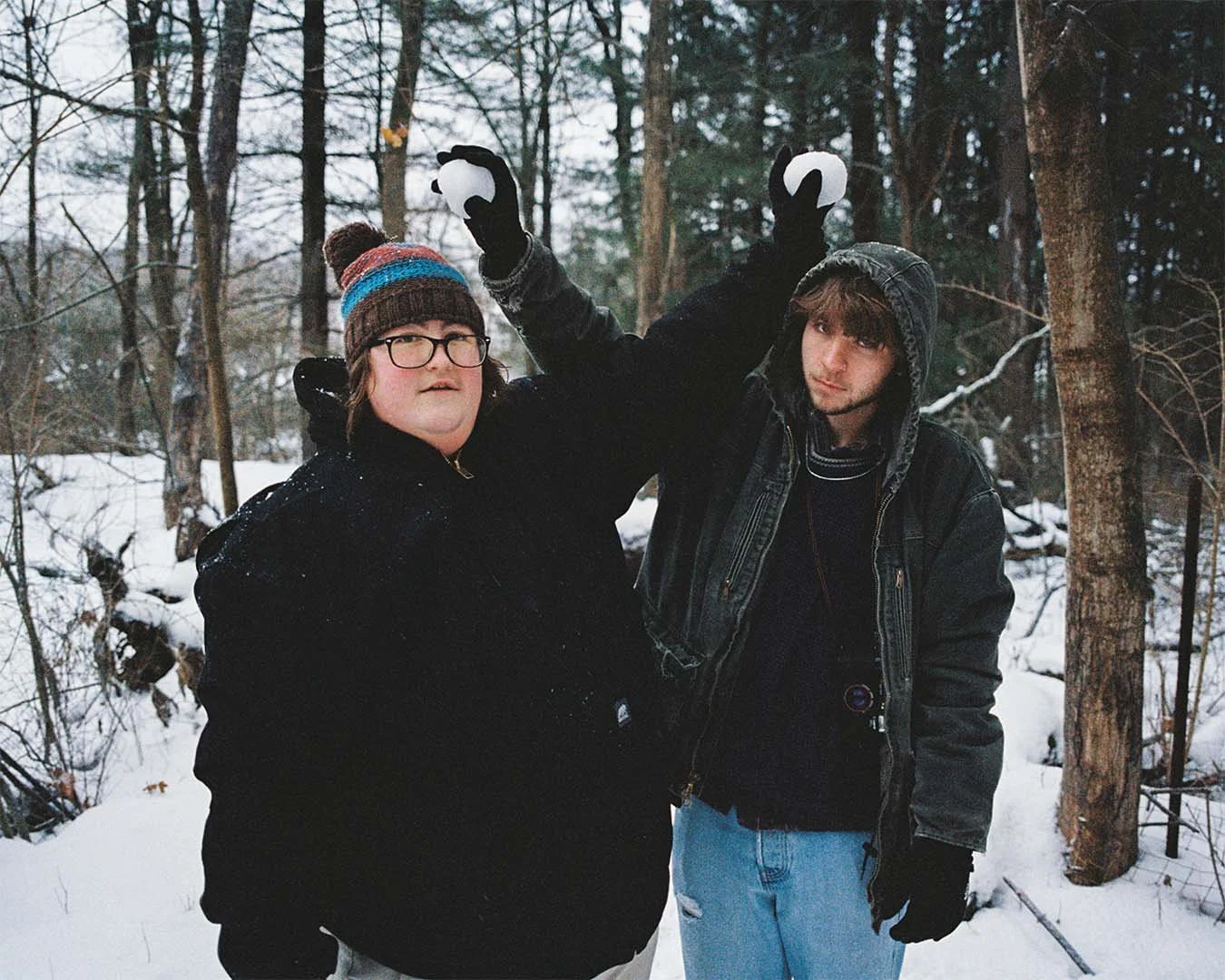
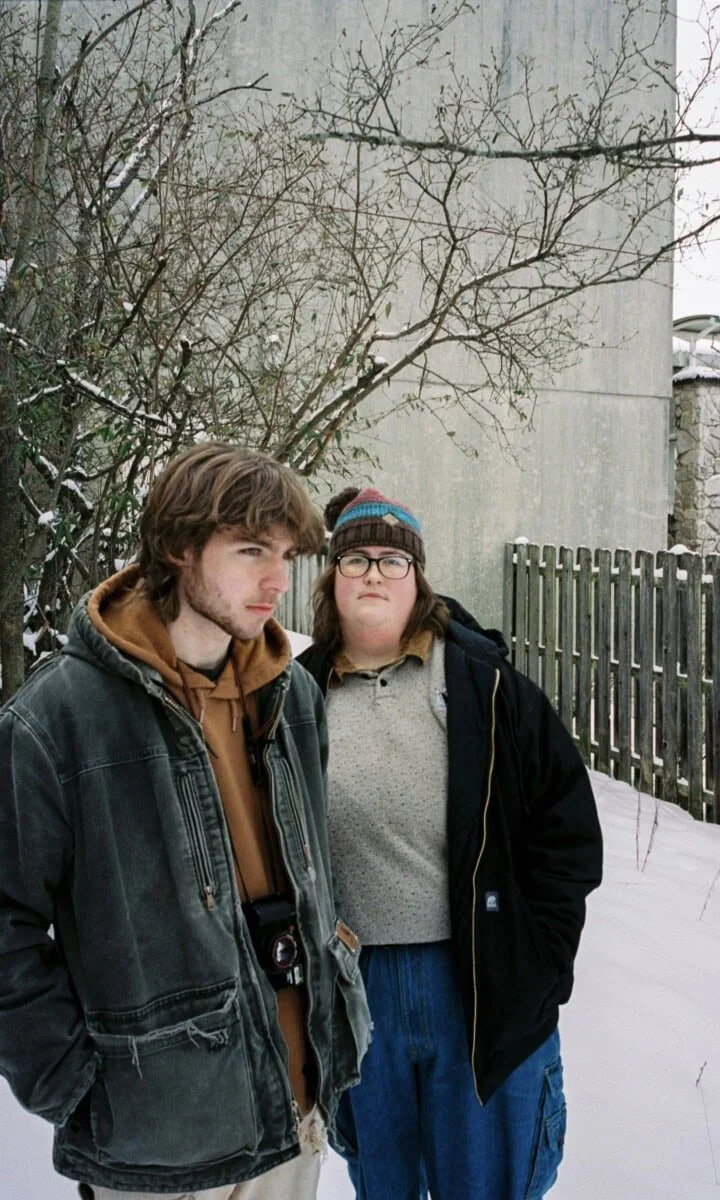
Hey, Nothing is a band that came into my life when I needed them most, craving the confessional and raw energy that they bring to their music as a mirror to my real life struggles that I was facing when I found them. Tracks like Maine became a part of my daily life soundtrack. The work of Harlow Phillips and Tyler Mabry is something that has stayed with me.
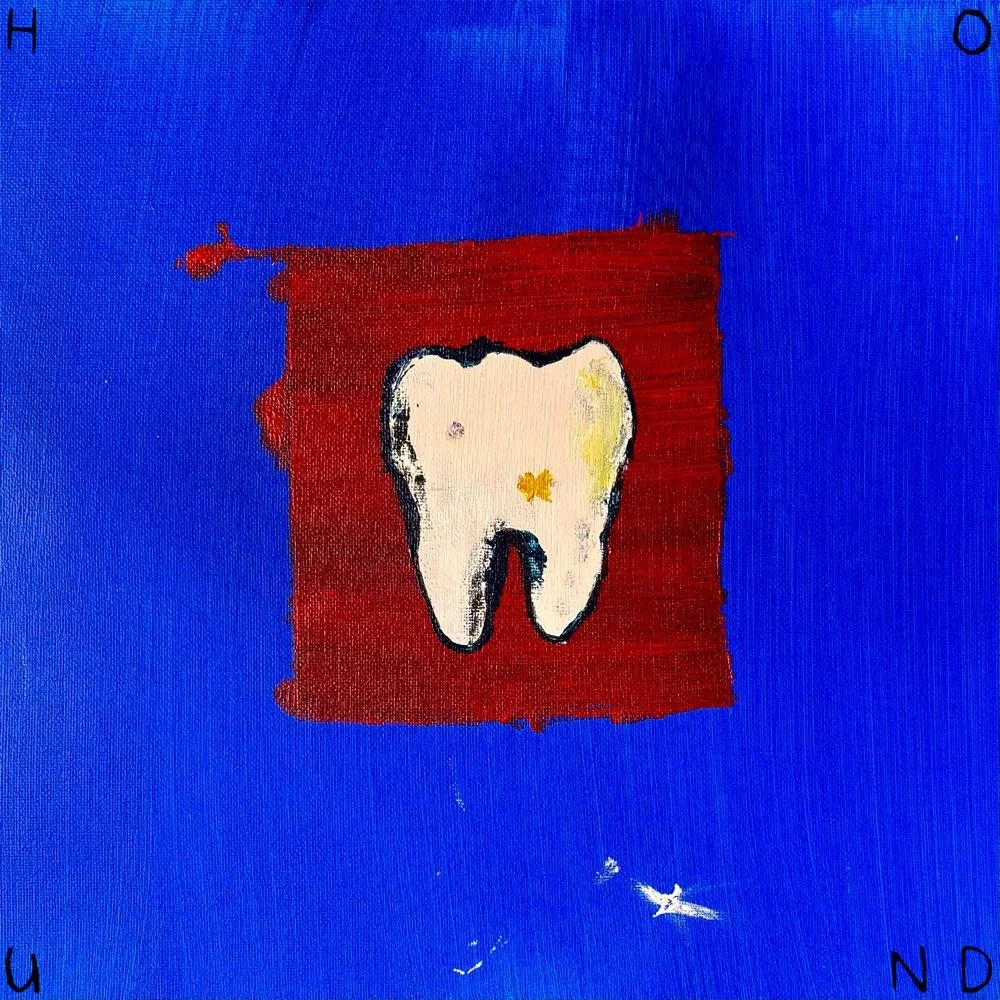
So you can imagine my excitement when they announced their debut album Hound and with it once again was able to articulate feelings that I myself can't find the words to, particularly on tracks like “Arteries.” This interview will cover their lyrical depth and the way that they are able to navigate their dynamic with each other which such respect, love, and care that is refreshing to see and not only a creative duo, but in a platonic relationship that is treated highly.
As we settled into the interview it was clear to see the collaborative energy that they share with each other not only in their work but in the way they communicate about why it matters and Hound is a record that truly bears witness to this dynamic and how it fell apart only to come back together. Some of the deepest moments of their early twenties were lived together and on this project they were truly able to reflect in a way that allows listeners to be led into deep parts of their life that are an honor to find yourself within.
I entered the interview for Uptight Magazine as a fan and left even more appreciative of the true artistry that they clearly feel in their very being.
Q: Hound explores the idea of rootlessness and loyalty. I was wondering what it was like discovering the concept for the album and what it was like tracking what story you wanted to tell across it, especially as your debut full length record?
Harlow Phillips: It took a really long time. I think we didn't really discover, I think at least for me, I didn't really feel like I knew the whole trajectory of the album until we wrote Hound, which was like the last song we wrote for the album. And then I was like, ‘oh, it all kind of makes sense.’ Hound kind of encapsulates the last two years of our lives. And I think the story that we were telling was the last two years of our lives.
Tyler Mabry: Yeah, absolutely. I mean, the last two years of our lives, we had the privileges of traveling to so many different cities and countries in the world. And at the same time, we were extremely burnt out and depressed and anxious. And so I feel like our goal with Hound was to make a full length project that encapsulated kind of like all of those feelings, good and bad. And some of the nights were party nights and other nights were to go to the hotel and cry in the green room and blow your nose forty times. And I feel like that was the whole ethos for the album by the end.
HP: Yeah. And then I feel like with writing Hound, that just kind of like put a pretty ribbon on everything and really tied it all together.
Q: And I think you can hear that duality across the record to the happy moments in kind of the darker ones. I know that earlier songs focused on painful memories for you guys, but I know for Hound you've spoken about having happy reflection. So I was wondering what it was like kind of exploring both and if that was difficult at all, because I know some writers talk about how it's easier to write about the difficult experience, but actually harder to write a happy song. And if you ran into that at all.
HP: Oh yeah. Absolutely. I feel like by this time in our career now, I feel like we've experienced writer's block in both ways. Where it's like, if it feels like you can't write any song, but it does sometimes happen that the hard and gut wrenching songs are the ones that come out the easiest. But I think the challenge for this record to ourselves was to not just do the gut wrenching stuff anymore. And we have more in our kit. We're more capable of creating different art.
TM: Yeah, for a long time I felt that we were very like maybe limited in our capabilities and we were at least a little bit good at writing the more emotional songs. And I still think that that's true and that we're okay at writing those kinds of songs. But it was interesting writing this album because we challenged ourselves to try to write a rock song or something that's more energy based. And when we had that task in mind, we ended up writing like the saddest songs on the album.
HP: That's true.
TM: I find that very fascinating. I think when we want to be like, okay, let's sit down and write a folk song, I think that's usually when the energetic stuff comes out. And I think a lot of this album, the songs came from places that felt like they were kind of like crawling out of us rather than us birthing them, if that makes sense. Like every time we were like, we need to write this kind of song, that's not what's going to happen. It's just like, whatever actually is naturally in our stomachs is what's going to end up on the record. And I think that happened.
HP: Yeah. Which I think is cool. Like, you can never help what comes out of a writing session. You know, like we always say that there's this quote that's like, the song already exists. You just have to find it. And you have to—like the song exists in the world, you just have to like dig.
TM: [It’s] buried in the sand.
HP: Yeah, in the writing process, just the digging. So yeah, I think we had trouble writing both happy and sad songs, but I think the fight to do both of those things made us better writers and made better products.
TM: I think too, and I think it made the final product of Hound more diverse sonically.
Q: That's so cool. I love how you describe it as it crawling out of you rather than birthing. That makes a lot of sense. In the lyrics for “Hound” specifically, you mentioned Blame It on Veronica, and I was wondering what it's like for you to have that specificity in the songs when you're choosing names to use and kind of how you paint around the imagery when you're looking to be more specific?
TM: I don't know anybody named Veronica.
HP: I know one person named Veronica. It's my old coworker and she is lovely.
TM: I'm sure she was.
HP: Yes. And I wouldn't blame anything on her. But choosing names, I think they are just kind of like, I think with names specifically, usually we're very specific about the words we use when we're writing, but I think names we kind of don't really think about it.
TM: I think it's whatever is most phonetically pleasing. That's what I was going to say. It's like whatever rolls off the tongue and Veronica really rolls off. It rolls off the lips pretty well.
HP: The tip of the tongue, the teeth, the lips. But yeah, like with songs like “Hound” and then stuff like “33°,” Tommy just kind of fit in there…Tommy's our producer.
TM: We're at Tommy's house right now, but the song is really kind of in no way really about him. But what's funny is I think that every time we play that song and sing it, when we sing Tommy, I'm thinking about Tommy. And so maybe if I meet a Veronica—
HP: Then she'll become a part of our everyday thoughts.
TM: I remember for me, Veronica, when we sing hound, it's like the only reference for somebody named Veronica is in the movie Billy Madison.
HP: Oh my God.
TM: I think it's the teacher. Her name is Veronica Vaughn. And the whole movie is like, just gawking. That's Veronica. If you wanted to know, that's her. Blame it on her. That's how I'm thinking about it.
Q: I love that. What has it been like for you guys to get comfortable with the vulnerability of sharing your lyrics with the world, too, especially because they can get so personal? And has that kind of been a progression to find that line of what you're comfortable with and what you're not?
TM: It's very interesting because our relationships with the songs themselves change over time. But also our relationships with the things we're writing about change over time. And sometimes I think they kind of collide to a point where some of the songs we wrote a year or two years ago, sometimes they're harder to sing now because circumstances have changed and they don't really mean the same things.
And sometimes they're actually a lot sadder given the context of things that are actually happening in our lives. But at the same time, I'm very grateful that they're out there and that people can connect with them. The way that I think they were intended to be connected with. And same thing with performing them, at any time I'm feeling bad about performing one of the more vulnerable songs, I just have to remind myself that there is usually somebody in the crowd that is connecting with it in a way that I would have liked to connect with it if I were experiencing the things that they were.
HP: Yeah. I couldn't have said it better myself.
Q: Can you walk me through the track “Drywall” specifically? I thought there was a very beautiful backing vocal throughout that song, and it really is one that stuck out to me. So I just wanted to hear more about it.
HP: Yeah, “Drywall” is one of my favorites. Just like the writing process was something that kind of came about spontaneously. We were sitting around, we kind of didn't know where the album was going. It was kind of dead in the middle of creating the album. And we were kind of going through a bit of a rut. And one of our really good friends Bea Porges came over to just kind of hang out. She didn't really think she was going to write. She was just visiting us in the studio. But we asked her if she would sit down and help us think of something. And Tyler pulled out like a piece of this song,
TM: Like the first line of the first verse of “Drywall.”
HP: And all of us just immediately connected. But the story that we got out of that was basically the story of my great grandfather's passing and that sort of scenario through my great grandmother's eyes. And it was pretty recent as of when we wrote the song. And I feel like everyone just kind of connected to having someone pass in their life and wanting to know what it feels like from the perspective of like the spouse of that person, and the heartbreak that goes through that. But then it was also really cathartic, I think, being able to remember him in that way and being able to like go around the table of all of us in the writing session and be able to share memories of him and then other people who had passed. But yeah, the story is basically like my great grandpa passed and he was kind of crazy and senile at the end of his years. So he was doing a lot of weird stuff, like turning up the heat to like eighty four degrees in the house and getting lost on the road driving, and the DMV gave him his license back.
TM: Even though he shouldn't have.
HP: Even though they should know at like ninety three years old. So yeah, it's just kind of like an amalgamation of all those—
TM: All the ways for us to immortalize Charlie through art.
HP: Exactly. And I'm so happy about it, so happy that it came out that way.
I'm sorry for your loss, but I'm glad that it was able to be a cathartic experience for sure.
HP: Thank you.
Q: Do you have any other favorite songs, either sonically or lyrically, and I was just wondering why they resonated with you the most if you do have favorites?
TM: Oh yeah. “Hound” all day.
HP: “Hound” all day, every day.
TM: “Hound” was the last, I think we said that, “Hound” is the last song we wrote for the album, and it was just the final piece, and we wrote it in probably forty five minutes. That doesn't really happen for us often anymore. Like that happened when we were fifteen and sixteen years old, songs come out like that. But throughout the entire process of writing the album, nothing ever really felt natural to write until hound, and I have such fond memories of writing hound with you. And I also think it's my favorite because the lyrics don't mean much.
It's more about a feeling. And I think these days we both kind of gravitate towards music that is more feeling based, maybe. And it's about a bunch of nothing, but I think it invoked such a strong feeling for us, so much so that we named the album after it, and I just really enjoy it, so when I go back and listen to the most—
HP: Yeah, certainly, me too. But I think the one I listened to the most is probably “Drink Your Honey.”
TM: Really?
HP: “Hound” is a close second. But yeah, “Drink Your Honey” to me is just like, that never fails to tear me up every time. Like there was this song, “Your Purple Eyes,” that you wrote a long time ago and that used to invoke those feelings in me. And it still does. It's a great song. But I think “Drink Your Honey” just takes that to a new level just because it's a view into our relationship as it is now.
TM: Sure. And yeah, same with “Walk Forever.”
HP: I love it. It's just so raw and honest. And I love the way you sound.
TM: I love the way “Walk Forever” sounds too. And I think those songs are like siblings.
HP: Yeah. It's so you, you know. Yeah. So yeah, that's definitely one of my favorites. But I think in the grand scheme of Hey, Nothing, “Hound” is probably my favorite.
TM: I think hound is something too, that when we go to make our next record, it's going to be like, okay, now that we've written hound, how do we just explore that?
HP: How do we make Hound two, three, four, and five and six?
Q: That's awesome though. Some of the tracks like “Drywall” and “Drink Your Honey” feel stripped down compared to others in the actual sonic style compared to more aggressive ones like “Boat Garage.” I was wondering what it was like balancing that and kind of guiding the instrumentation as you went.
HP: Yeah. Well, that's all for you, baby boy.
TM: I think when we're in the weeds in the studio making songs for an album, we have the subconscious idea to make it all cohesive. But I think when we're focusing on a specific song, it's hard to do anything but serve the song itself. With “Drink Your Honey,” that one definitely, like I remember I wrote it in our old apartment when Harlow was sleeping, and so I had to sing it and write it quietly. And I really wanted that to come through in the recording. And “Drywall” also feels like one that is such a vulnerable song that it almost feels like if somebody's telling you that story, that it needs to be whispered in a public place. You know what I mean? Something vulnerable and you don't want other people hearing it.
HP: But yeah, it just feels like a retelling of an old tale.
TM: And then I think folk rock was literally written so we have something fun to play. And I think we were writing a lot of sad songs for the album, and there was a moment where we were saying, this is going to suck to play on the road. This is not going to be fun for anybody, not even our fans, not us. And so “Boat Garage” was literally written with the purpose of having a rock song, and that kind of opened the door, and made Hound possible, I think. And it made even the heavy part on arteries feel fun to make loud.
Q: I read that you took a break after finishing this album to just be friends again, and I was wondering what that was like and how it has kind of helped your creative process, because I know you've been writing together for many years, going all the way back to middle school?
TM: It was wonderful.
HP: Yeah, it was wonderful. It was like completely integral, I think, to where we are at now and being able to like go back on the road and just kind of like hit play on our career, basically. Because I think there was just a point where, I think for both of us, like we didn't know where one person began and the other person ended. You know, like we were just so enmeshed in career and life, in life, in friendships.
TM: We would wake up at the same time and be like, where do you want to go to breakfast? And then we'd go eat breakfast and we'd come home and we'd be like, do you want to go to REI or something? We’d go to REI together. Come back. What do you want for lunch? Do you want to watch a movie? That was like every day.
HP: Yeah, we were like completely and fully just kind of enmeshed.
TM: We go anywhere without each other, people are like, where's the rest of you?
HP: Where's the rest of you? And yeah, for people who are nineteen to like twenty three years old and learning who you are and trying to develop as an individual, I think it was really important for us to like take a step back, zoom out and be like, okay, who is Harlow and who is Tyler and what is outside of Harlow and Tyler? And so we took a break from each other. Like we both went to California for two weeks on either end of each other, separate times. So we spent like a full month apart,
TM: Which is just really great.
HP: It was amazing. And it also gave us the opportunity to miss each other again and what that felt like, because both of us had gotten to a point, I think, where we just forgot what that was like.
TM: Yeah, you're so scared. And I remember too, feeling some sort of anxiety that stepping away from the music and stepping away from kind of everything wasn't even an option because of like label obligation, and that kind of thing. And so there's also a chance for us to prove to ourselves that we can, and then come back fresher and that would be an okay thing to do.
HP: Yeah, it's true. But yeah, definitely super important, and so glad that we did it. And it also changed our relationship.
TM: Changed lives.
HP: And changed lives across the board. But it changed how we like to show up for each other and it changed how we communicate with each other as well. I think there is a level of openness now that we did not have before, because we were both so scared to hurt one another.
TM: But I think because it became normal to assume for each other and it became normal for us to have lunch together every day and get to the point where if I thought about getting lunch and I wanted to do it alone, I was like, I can't get lunch alone. You’ve got to be able to get lunch alone.
HP: You’ve got to be able to get lunch alone. That is the real kicker.
TM: And now we get lunch alone almost every day. And sometimes it's the same lunch, but it's different.
HP: But it's alone and it's totally different times.
Q: I know you mentioned label obligations, but I was also wondering what it's been like balancing blowing up on social media and TikTok too, and kind of how that can play into the pressure of the music? Because I know specifically, one of the tracks on the record, seeing you, also went viral on TikTok and just seeing how people sometimes get weird about changing the song between the demo that you hear online and then the final version and how you kind of deal with that too.
HP: I think now we both are at a good place of like kind of ignoring.
TM: I don't really care.
HP: I do not care.
TM: I did at the beginning,
HP: I definitely did at the beginning. I cared a lot about what people were saying and what the reaction was. But I think you just get past that in your career, especially when it's so online and so public, you're like, those things just don't really matter to me. It really matters like what the people around me who know me say,
TM: And also like the energy I'm putting into the art at the moment of creation, not thinking about what anybody's going to think after it's made.
HP: Yeah, it's how we feel and how our fans feel and how our friends feel about the music. And then when it comes to like label, they've been nothing but—
TM: They just let us do whatever the hell we want with the music. And that is incredible.
HP: It does kind of feel like a dream because when you enter the music industry, people become so jaded to all of it and can become really cynical towards everything. And we've just, I feel like, gotten so lucky that we have a team behind us that really believes in us and trusts us to—
TM: They trust that whatever we do is going to be what's right for Hey Nothing.
HP: Yeah, and I think being given that kind of team and then being given that kind of trust,
TM: That kind of money,
HP: And that kind of coin is rare for sure. And we're just so thankful. We're just really grateful.
TM: We're so freaking lucky for everybody. Any other team, we would have died.
HP: Yeah, definitely. Yeah.
Q: Another thing I noticed on the record was a lot of animal imagery. In your titles you have hound, Beluga Whale, and Black Bear. I was wondering if there's anything behind that that's significant to you at all when you were choosing the titles?
HP: We just kind of like animals.
TM: Honestly, yeah. That's just part of us that has kind of just bled through. Wasn't intentional. Just bled through.
HP: Yeah. And we're always saying like, a lot of interviews we get questions about like what inspires us and stuff. And yeah, I think animals and like a lot like the natural beauty of our surroundings, and we like to go into the woods and we like to go and hike and we like to be in nature. And I think something that goes hand in hand with nature is animals. And yeah, I think there's not like a super deep answer, unfortunately.
No, that's okay. I love it.
TM: We're about to go record a song for the deluxe that is about four different animals, correct. So I look forward to that. I love animals.
Q: I was wondering why “Arteries” felt like the right song to end the album on and how you feel that kind of tied up what you were trying to say across the record?
TM: “Arteries” was for us a very on the nose song about our codependence and our feelings towards the situation at the time that we ended up writing it before we took a little hiatus. And I think it really just was us communicating to each other in the form of song.
HP: Like a musical.
TM: Like a musical. And I think it's cool. I think we liked how it felt at the end of the album, because it was kind of on the nose and personal. And we wanted to make sure that the things that we'd expressed to each other in the song were like the final word. But then again, we were not too precious about the order of the album. Tommy and I thought a lot about it and tried a bunch of different things, but a lot of it was intuition and instinct.
HP: Yeah. And I also think dynamically, it's like I think the most unique too in the way that from start to finish, you get somewhere, you know. And that I think encompasses the album really well too, where it's super slow and soft and then it kind of gets there in the end like kind of becoming chaotic. And I just feel like that as a whole really wraps up the album too.
Q: I know you mentioned that Tommy helped with the track listing and I was wondering what it's been like co-producing with Tommy, because I know you've both mentioned codependency and how that can get caught up in the creative process, but I was wondering what it's like to kind of have that outside voice. Instead of working in a vacuum together?
TM: Tommy was a really strong force in kind of keeping that at bay. There's a lot of times making the album where Tommy and I would just turn knobs and really talk about the sound of the album. And he's also—we're also both so insanely close with him that I think for us, he just feels like a third. Yeah, he feels like our third.
HP: He’s our third, we saw him from across the bar and we liked his vibe. We liked his vibe. And so we made an album. And so we took him home and we made an album.
Q: Looking ahead, I was wondering what direction you want to go in with your music moving forward, especially now that you've had that breakthrough with each other of that time apart, and if there's anything kind of inspiring from that?
HP: I think this next project that we're going to start working on whenever—you know, we don't really have a window… that we've set for ourselves.
TM: Like [a] plan.
HP: But we want to write a true rock record.
TM: A rock record, something maybe not even a rock, but like something super energetic. Yeah, something super rhythmic.
HP: Something that's going to make the people dance.
TM: Exactly. And something that we have a lot of fun playing on stage and something that people will have a lot of fun watching from an audience perspective. I think that's our goal.
HP: I don't know why I thought you were going to say like on Hulu or something.
TM: Well, Lollapalooza, Hulu live stream. So something that'll translate on a Hulu Lollapalooza livestream.
HP: Yeah. And Coachella.
TM: And Coachella.
It was truly refreshing to watch this duo be able to not only share such serious sides of reconstructing their dynamic but also to be able to talk about grief and change with humor at least across the conversation as well and I thank them for their vulnerability that they shared across the conversation.
Fans can get excited as there is more to come and for those just discovering the group Hound is available to listen to now and with this personal look you will now have a glimpse into the topics that shaped their debut record into what it is today.